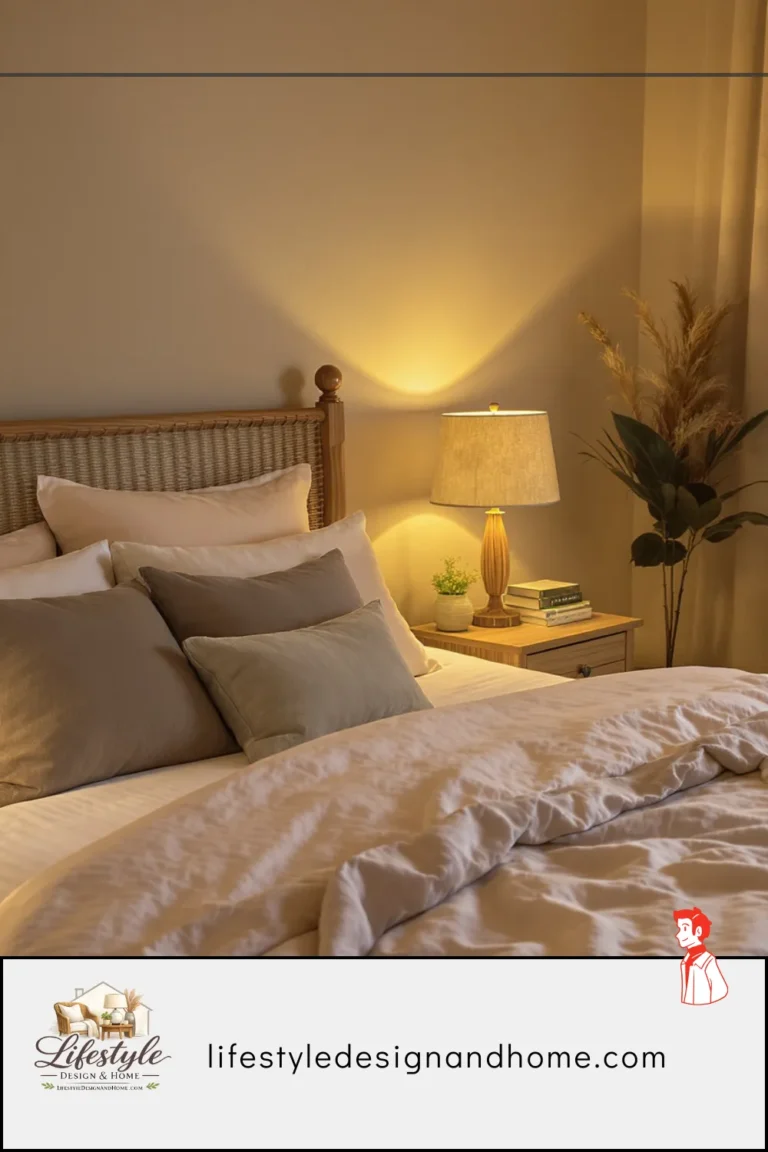
The Moment a Room Stops Being a Room and Becomes a Feeling
There’s a specific hour in the evening — somewhere between 7 and 9 PM, depending on the season — when certain rooms transform.
You’ve seen it happen. You walk into a living room and something is different from the afternoon version of the same space. The ceiling feels lower, warmer. The corners are soft. There’s a quality to the air that makes you want to sit down and stay there, to pull your feet up and lower your voice slightly, to feel — without quite articulating why — that you are somewhere safe and comfortable and not in any hurry to be anywhere else.
That transformation is almost never about the furniture. It’s almost never about the paint color or the throw pillows or the carefully chosen coffee table books. It is almost always, entirely, about the light.
Lighting is the most underestimated design element in residential interiors, and it is simultaneously the most powerful one. Nothing changes how a room feels faster or more completely than lighting — not a fresh coat of paint, not new furniture, not a renovation. A room with mediocre furniture and exceptional lighting will always feel more inviting than a room with exceptional furniture and mediocre lighting. This is not a subtle effect. It’s the difference between a space that people lean back in and a space that people sit forward in, unconsciously ready to leave.
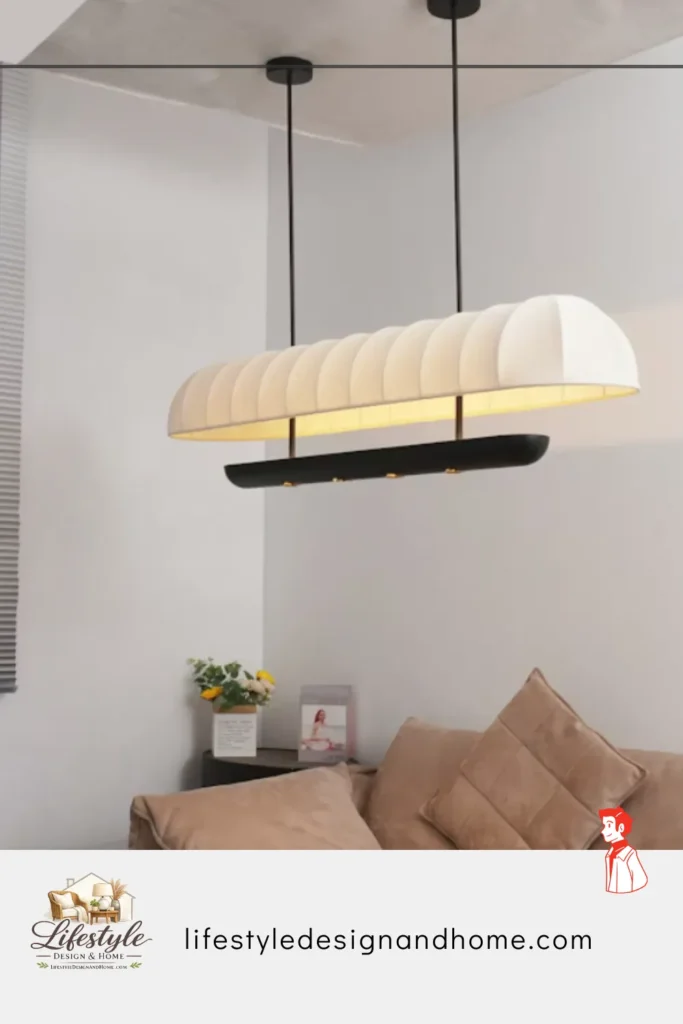
This guide is about how to create that transformation deliberately — how to build lighting layers that make your living room feel genuinely cozy at the hours when you most want it to. We’re going to go through the ideas, yes, but we’re also going to explain why each one works. Because when you understand the psychology and physics behind mood lighting, you stop guessing and start making decisions that stick.
Why Most Living Rooms Have the Wrong Light (And Don’t Know It)
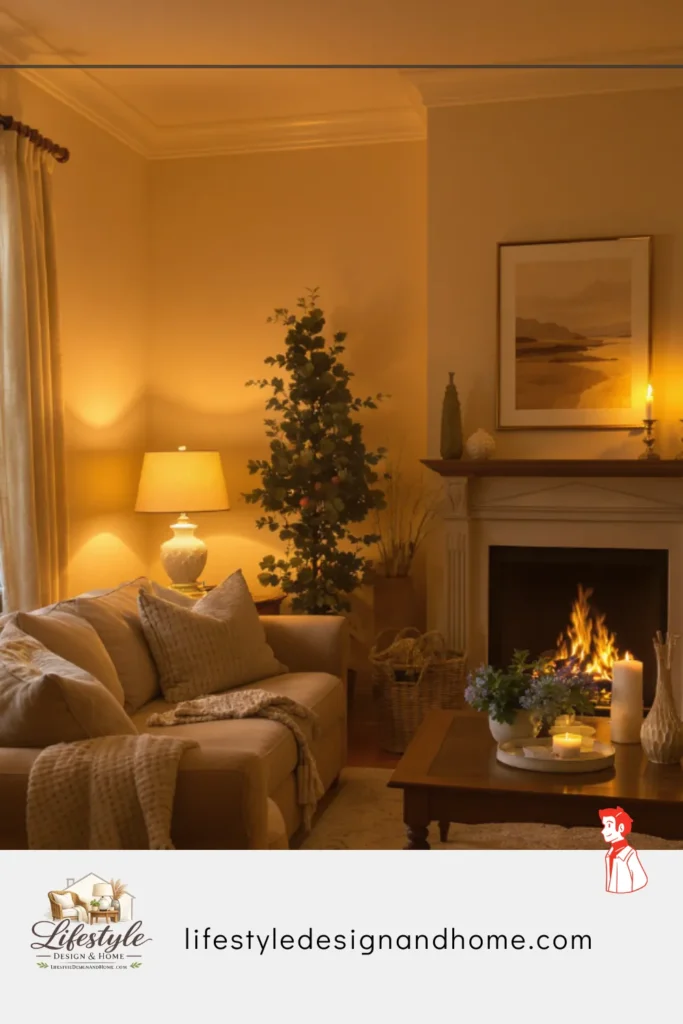
Before we get to the ideas, we need to talk about what most living rooms are doing wrong — because the problem is so normalized that most people don’t even recognize it as a problem.
The typical living room has one overhead light. Maybe a ceiling flush mount. Maybe a ceiling fan with a built-in light kit. Maybe recessed can lighting installed in a grid across the ceiling. This overhead source is switched on when someone enters the room and switched off when they leave. The room is either fully lit or dark. There is no in-between.
This is, from a mood and comfort perspective, one of the least effective ways to light a living room imaginable.
Here’s the core problem: overhead light comes from above, and it illuminates everything equally. Every surface receives approximately the same amount of light. Every corner is visible. Every wall is equally bright. The room has no mystery, no depth, no sense of layers. The brain processes it and reads: functional space. The same light you’d find in an office, or a hospital corridor, or a retail store. Your nervous system registers it as a space for activity, not rest.
Natural light behaves completely differently, and that’s the key. Watch what natural light does in the late afternoon of a good day — it comes in low and sideways, it hits some surfaces and not others, it creates distinct warm pools and cool shadows, it changes the color of everything it touches. Rooms that feel beautiful in natural light feel that way because of its directionality and variation. The goal of mood lighting is to recreate that quality artificially — multiple sources, varied heights, warm color, intentional contrast between lit areas and shadow.
When you do this well, the room stops feeling like a lit box and starts feeling like a place.
The Foundation: Understanding Color Temperature
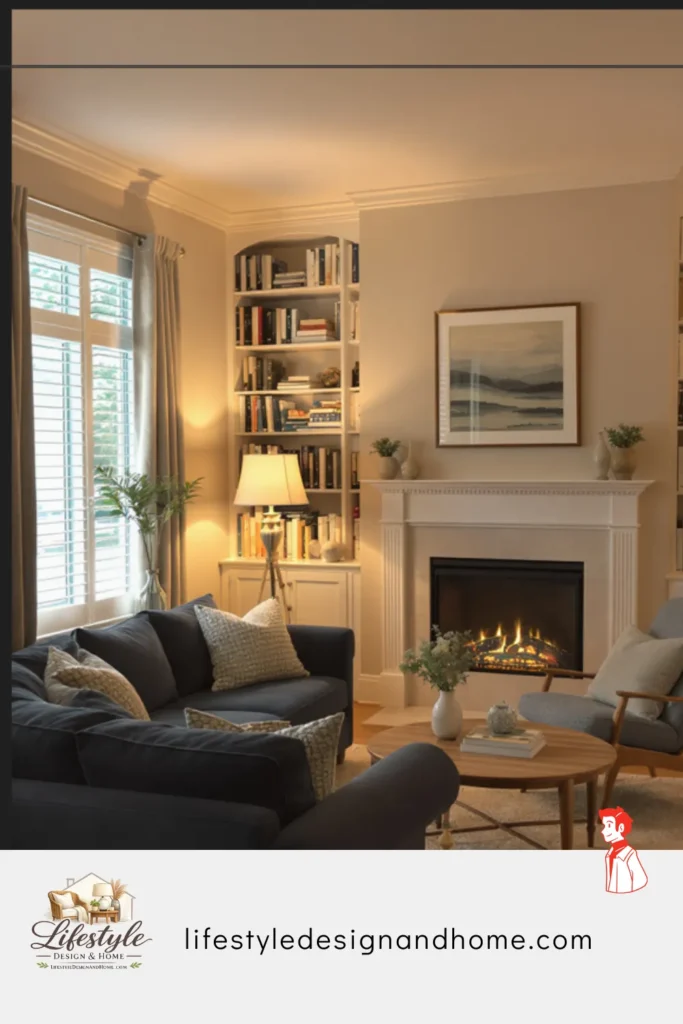
Before any specific ideas, there’s one technical concept worth understanding because it will inform every lighting decision you make: color temperature, measured in Kelvins (K).
Higher Kelvin numbers mean cooler, bluer light. Lower Kelvin numbers mean warmer, more amber light.
5000–6500K: Daylight or cool white. Looks like midday sun. Used in offices, workshops, and bathrooms where task visibility is the priority. Makes rooms feel alert, clinical, and large. Not what you want for cozy evenings.
3500–4000K: Neutral white. The default bulb that comes in most fixture packages at hardware stores. Technically fine for general illumination but lacks warmth. What most living rooms are currently using. The reason most living rooms feel like waiting rooms at 8 PM.
2700–3000K: Warm white. The sweet spot for living rooms. This is the color range that reads as genuinely warm and inviting — close to the color of old incandescent bulbs that everyone remembers fondly. Flattering to skin tones, flattering to wood tones, flattering to almost every material you’d put in a living room.
2200–2400K: Candlelight range. Very warm, very amber. Beautiful in small doses — accent lighting, candles themselves, vintage Edison bulbs. Can feel too yellow or dim as a primary source but adds incredible warmth as one layer among several.
The single most impactful lighting change most people can make costs about $15 and takes twenty minutes: replace every bulb in your living room with 2700K LED bulbs. Before you buy a single new fixture, before you add any layers, just change the bulbs. The room will feel different that same evening.
Mood Lighting Idea 1: The Layered Light System
This is not one idea — it’s the architecture that makes all the other ideas work. Everything else in this guide is a layer that slots into this system. Understanding it changes how you think about every lighting decision you’ll ever make.
The layered lighting system has three components:
Ambient lighting is your base level of illumination — enough to move around safely and comfortably. In a living room, this is typically a ceiling fixture, recessed lights, or a chandelier. The key move: put every ambient source on a dimmer switch. Not optional. Dimmers cost $20 to $30 each and transform your lighting flexibility completely. When ambient lighting is dimmed to 30 or 40 percent of its full brightness in the evening, it stops being the dominant source and becomes a quiet background presence. The rest of your layers take over.
Task lighting is directed light for specific activities: reading, working, crafts. A swing-arm lamp beside a reading chair. A well-positioned table lamp at the end of the sofa near where someone reads. In a living room, task lighting doesn’t need to illuminate the whole room — it just needs to put enough light on the page or screen for the person using it.
Accent lighting is decorative and atmospheric — light that’s used to highlight something, create warmth in a corner, or add a point of visual interest. A small spotlight angled at a piece of art. A table lamp with a decorative shade that creates a warm glow around itself. Candles. LED strip lighting tucked behind furniture or shelving. String lights. This is the layer that does the most work for mood.
The lighting formula for a cozy living room evening: ambient dimmed low, task lights on for whoever needs them, accent sources on throughout the room. Three to five light sources total, none of them at full brightness, distributed at different heights throughout the space.
Mood Lighting Idea 2: Floor Lamps in the Corners (The Transformation Move)
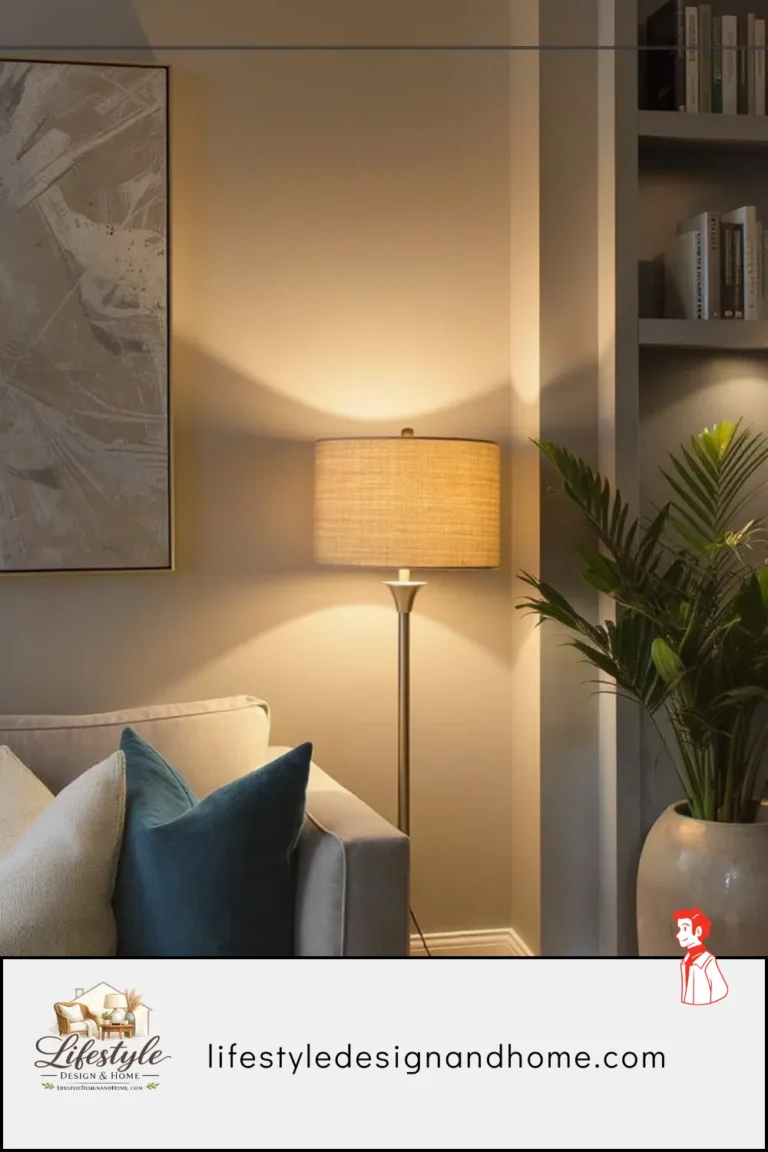
If you have no other lamps in your living room and you’re only going to add one thing, make it a floor lamp in the corner that gets the least natural light.
Here’s why this works so reliably: corners are the room’s most psychologically significant spaces. When corners are dark and undefined, the room feels smaller and less resolved — the brain can’t quite determine where the room ends, which registers as unsettling in a subtle way. When corners are gently illuminated, the room expands. The eye reaches into the corner, finds something there, and the brain registers the full breadth of the space as warm and contained rather than hollow and uncertain.
A floor lamp with an upward-facing shade (a torchiere style) bounces light off the ceiling, creating a diffused, soft glow that fills the corner without creating harsh shadows. This is one of the best types of lamps for ambient mood lighting because it adds illumination without a visible bulb, making the light source feel like it comes from everywhere and nowhere at once — a quality that reads as naturally warm.
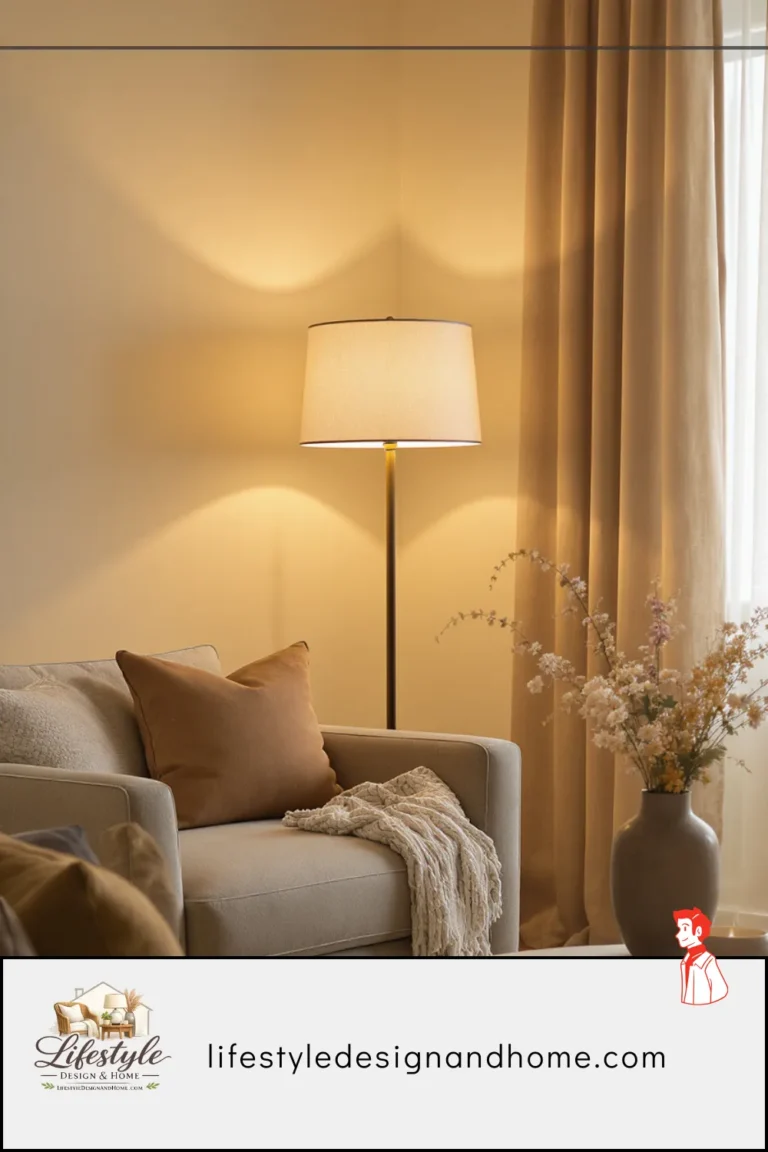
A floor lamp with a downward or outward-facing shade creates a pool of warm light at floor and furniture level. This is better for task applications or for accent lighting near seating. The decision between these types depends on what the corner needs: general room warmth (torchiere) or specific pool of warm light (standard shade).
For cozy living rooms, ideal floor lamp positions: one in the corner behind or beside the sofa, one in the corner diagonally opposite, potentially one beside the reading chair if reading is a primary activity. Three floor lamps distributed around a room — all at 2700K, all at moderate brightness — create the kind of layered, warm, multi-directional light that makes a room feel genuinely inhabitable at 9 PM.
Mood Lighting Idea 3: Table Lamps at Seated Eye Level
The height at which light originates changes how it feels dramatically. Overhead light comes from above and feels institutional. Light at seated eye level — roughly 48 to 56 inches from the floor, which is where a typical table lamp on a side table falls — hits the room at the same level as your face when you’re sitting down. It illuminates the people in the room rather than the floor and ceiling. It makes skin look warm. It makes conversation feel more intimate.
This is one of the reasons candlelit dinners feel romantic: the light is at exactly the right height to illuminate faces in warm, close-up light, and the flicker adds movement that overheads can’t replicate. Table lamps are the closest thing to that quality for living room use.
Every seating position in your living room should ideally have access to a table lamp nearby. Not necessarily directly beside every seat — one lamp between two seats works — but within the sightline and general vicinity of where people sit. Side table lamps flanking a sofa is the most classic configuration: symmetrical, functional, and reliable. A single table lamp on an end table at one end of the sofa, balanced by a floor lamp at the other end, is equally effective and less predictable.
Lampshade choices matter more than most people realize. A white or cream shade diffuses light beautifully and glows warmly from the outside — you see the shade as a light source in itself, which is part of what makes table lamps so atmospheric. A dark shade directs light downward and inward, creating a more concentrated, dramatic pool of light beneath with a much smaller ambient contribution. For cozy moods, lighter shades almost always outperform dark ones. For drama and sophistication, dark shades with bright light concentrated underneath can be striking — but they’re a design statement, not a general recommendation.
Scale matters too. A lampshade that’s too small for its base looks pinched and weak. A shade that’s too large looks top-heavy and clumsy. The bottom of the shade should sit at roughly eye level when you’re seated — around 40 to 42 inches from the floor is the standard — so the shade is in your sightline without the bulb being directly visible from normal seated positions.
Mood Lighting Idea 4: Candlelight — More Powerful Than It Gets Credit For
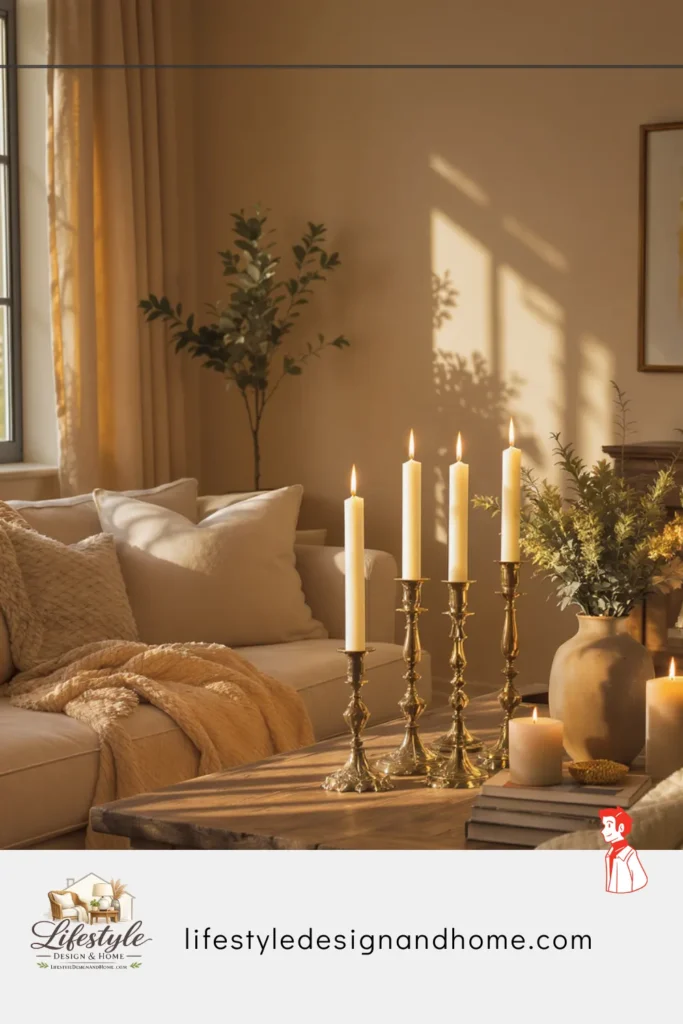
Candles occupy a strange position in interior design conversations — acknowledged as obviously romantic and atmospheric, but somehow treated as a supplement rather than a genuine design element. That’s a mistake.
Candlelight is the original mood lighting. The specific quality of candlelight — its color temperature of approximately 1800 to 2000K, warmer than any LED, plus its constant subtle movement and flicker — engages the eye in a way that static artificial light fundamentally cannot. The brain has been reading firelight and candlelight as safe and comfortable for hundreds of thousands of years. That response is not learned. It’s wired. When you introduce candlelight into a room, something below the level of conscious thought relaxes.
Grouped candles work better than individual candles in most living rooms. A cluster of three to five pillar candles at varying heights on a coffee table or a shelf creates a genuine light source with enough output to actually influence the room’s ambient quality. One lone candle is a gesture. Five candles grouped together is an atmosphere.
Placement for maximum effect: Candles on the coffee table at the center of the seating arrangement illuminates faces from below and center — intimate, warm, genuinely beautiful. Candles on a mantelpiece at eye level when standing create a focal point that draws the eye to the fireplace wall even when there’s no actual fire. Candles on a console or side table add a warm glow to an otherwise utilitarian surface.
The fire safety note: Never leave candles burning unattended, keep them away from flammable materials and curtains, and don’t place them near drafts. If fire safety is a genuine concern — homes with young children or pets, or renters who worry about the liability — flameless LED candles have improved dramatically in the past few years. The better options now flicker realistically and produce genuinely warm color temperatures. They’re not indistinguishable from real candles, but in a room with multiple other light sources, they add atmospheric warmth without the risk.
Mood Lighting Idea 5: Accent Lighting Behind and Beneath Furniture
This is the technique that makes people walk into a room and not quite understand why it looks so different — why it feels warmer and more layered and more considered than a typical living room — and then they notice the subtle glow behind the sofa or beneath the floating shelves and it clicks.
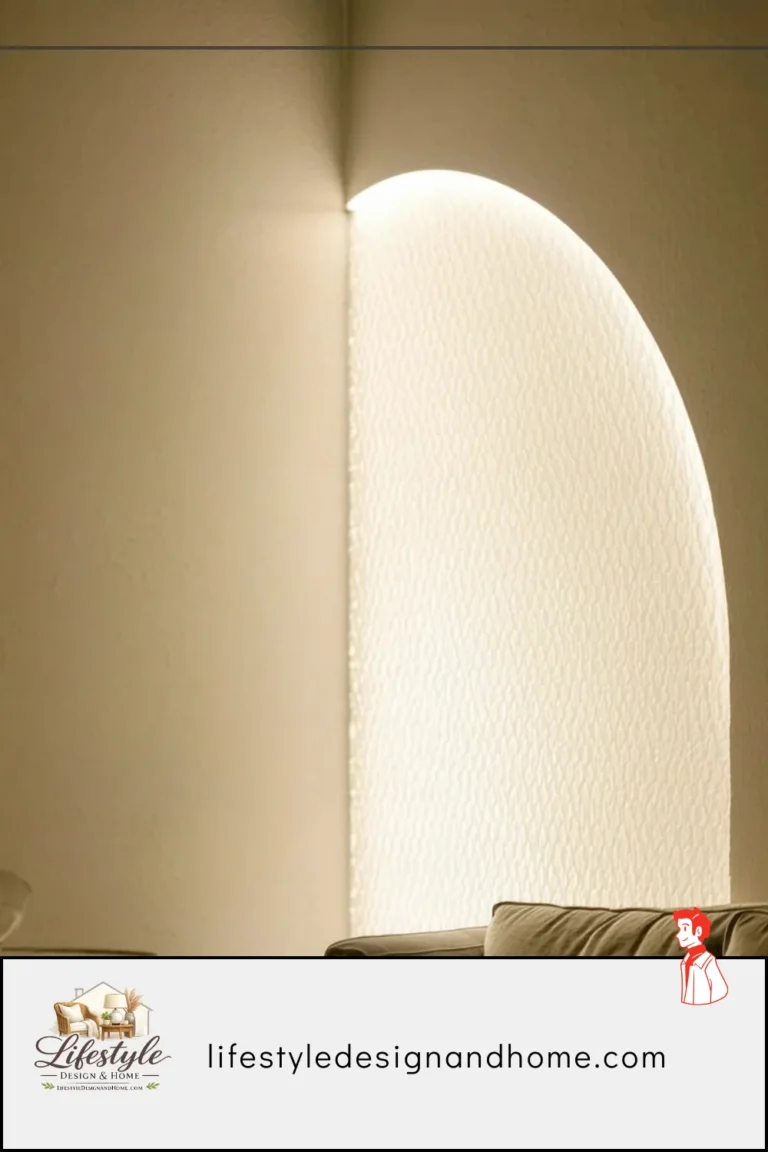
LED strip lighting — flexible adhesive strips of LEDs that can be cut to length and stuck to almost any surface — has become the most versatile mood lighting tool available for home use. At 2700K, tucked behind a sofa or media console or along the underside of floating shelves, they create an indirect glow that reads as architectural rather than decorative. The light source is hidden. You see the glow, not the fixture. This is one of the hallmarks of professionally designed lighting — indirect, hidden sources — and LED strips make it accessible for anyone.
Behind the sofa: A strip of warm LED lights adhered to the back of the sofa or to the baseboard of the wall behind it creates a warm halo around the primary seating. It defines the sofa as the room’s center and fills the gap between sofa and wall with soft light. It’s one of those effects that photographs extremely well and looks even better in person.
Under floating shelves: LED strips on the underside of wall shelves illuminate the objects on the shelf below them and cast a warm wash of light down the wall. This makes shelving look like a feature — deliberately lit, considered — rather than storage. The books and objects on the shelves become more interesting with directed light on them.
Behind the television: A warm LED strip behind the television (sometimes called bias lighting) reduces eye strain during viewing by reducing the contrast between the bright screen and the dark surrounding wall. It also creates a warm atmospheric glow around the TV that softens what would otherwise be a dominant black rectangle on the wall. This is one of the most popular and most recommended mood lighting moves in living rooms specifically because it addresses a functional problem (eye strain) while also improving the atmosphere.
Under console or media furniture: Light underneath low furniture — a credenza, a media unit — creates the impression of the furniture floating above the floor. It’s a sophisticated hotel lobby and high-end restaurant technique that reads as elegant and intentional. In a living room it adds warmth at floor level, which is one of the harder heights to address with standard lamps.
Mood Lighting Idea 6: Dimmer Switches on Everything
This one isn’t glamorous. There are no beautiful lamps to show here, no atmospheric photography to aspire to. It’s just a switch on a wall. And it is, per dollar spent on it, one of the highest-return lighting investments you can make.
A dimmer switch costs $20 to $40. It takes about fifteen minutes to install for someone comfortable with basic electrical work, or an hour for a licensed electrician if you’d rather not. And it transforms how you use every lighting fixture it controls.
The practical reality of mood lighting is that it’s context-dependent. At 5 PM on a dark winter afternoon, you want more light than you need at 9 PM when you’re watching a movie. At a dinner party, you want different light than you want for an ordinary weeknight. Without dimmers, your choice is fully on or fully off. With dimmers, you have infinite gradation — and the ability to dial any fixture down to exactly the contribution it should be making in any moment.
Priority order for dimmers in a living room: The overhead fixture first — this is the light that most dramatically changes the room’s character when dimmed. Any table or floor lamps you use regularly second, if they’re on wall switches. Consider smart bulbs (Philips Hue and similar) for lamps plugged into outlets — these allow dimming and even color temperature adjustment from an app or voice control, without requiring electrical work.
The target dimmer setting for a cozy evening in a living room: overhead at 20 to 30 percent, floor lamps at 50 to 70 percent, table lamps at 60 to 80 percent. These aren’t rules — they’re starting points for experimenting. The right setting is the one that feels right in your specific room, and you’ll know it when you find it because the room will feel like somewhere you want to be, rather than somewhere you happen to be.
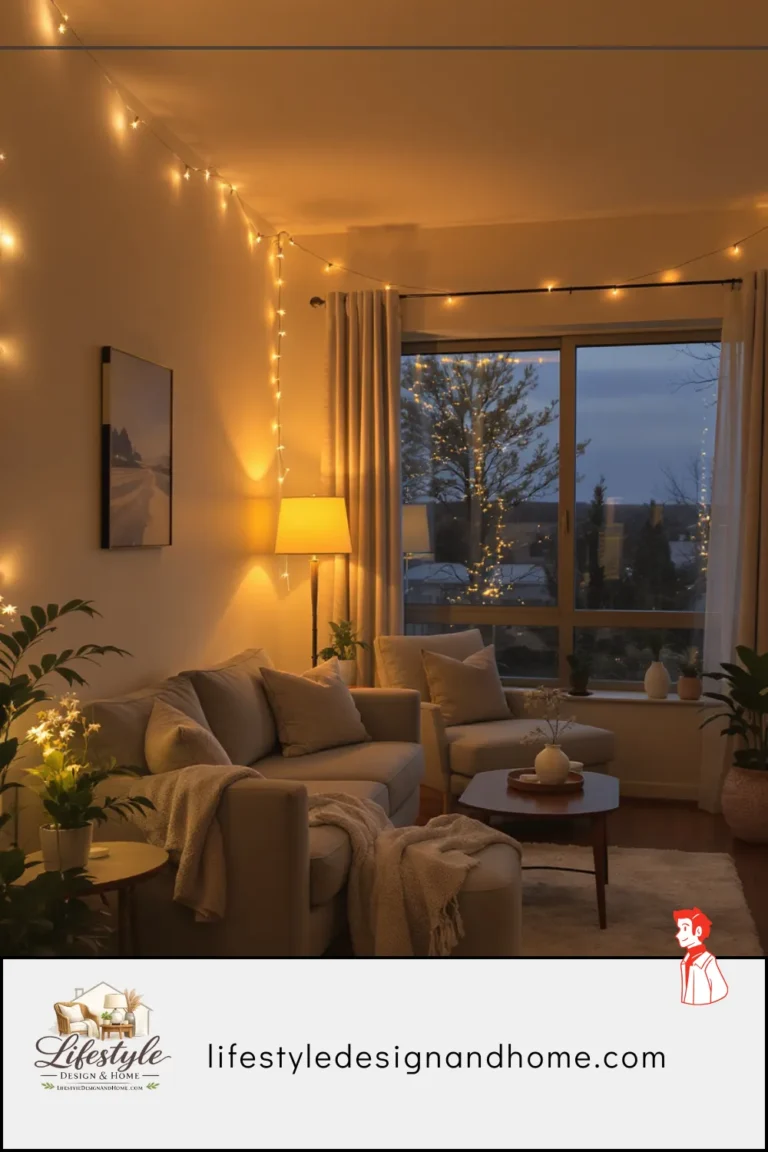
Mood Lighting Idea 7: String Lights Beyond the Obvious
String lights have a bad reputation in certain design circles — they’re associated with college dorm rooms and suburban patios, with a specific kind of casual-bordering-on-lazy decorating that serious interior designers tend to dismiss. This is largely unfair, and it misses something genuinely useful.
The reason string lights work for mood is the same reason multiple candles work: they create many small, warm light points rather than one large source. The eye reads a collection of small warm points as festive, intimate, and alive. They’re the poor man’s chandelier in many ways — they create the same sparkling, light-multiplying quality for a fraction of the cost.
The key is placement and restraint. String lights draped carelessly over anything look exactly like what they are. String lights placed deliberately look like a design choice.
Behind or within a tall bookshelf: String lights tucked along the back of a bookshelf, behind the books, creates a warm illuminated glow that turns the bookshelf into a focal point. The light is indirect and warm, the effect is cozy and considered, and it reads as intentional rather than casual.
In a large glass vessel: A cluster of battery-operated warm string lights coiled inside a large glass vase, hurricane, or lantern creates a tabletop accent that provides both warm light and visual interest. This is the string-light application that most successfully reads as design rather than dorm room.
Along a mantelpiece: Draped subtly along a fireplace mantel behind decorative objects, string lights add a warm layer that supplements the fireplace itself during months when the fire is lit and serves as the warm focal point during months when it isn’t.
What to avoid: String lights stretched across a ceiling in a grid pattern. String lights draped around window frames unless this is a very deliberate design statement. Any string light application where the wire is the most visible element rather than the lights themselves. Use warm white (2700K) rather than multicolor — multicolor lights in living rooms almost always look casual rather than considered.
Mood Lighting Idea 8: The Fireplace — Real or Otherwise

There is arguably no cozy light source more powerful than fire, and the living room is where it has always belonged.
A working fireplace is the ultimate mood lighting instrument. The combination of its warm color temperature (1800–2000K), the constant movement and flicker of the flames, the way it creates a natural focal point that draws everyone in the room toward it, the sound, the smell — no artificial source comes close to replicating it completely. If you have a working fireplace, use it. Light it earlier in the evening than you think you need to. Let the fire become the room’s primary light source during the hours when you want to feel cozy, and dim everything else to let it dominate.
For rooms without a working fireplace, the options have genuinely improved:
Electric fireplaces with LED flame effects have become surprisingly convincing in the mid-to-higher price range. The flame simulation in quality units — particularly those using 3D holographic or multi-layer LED technology — is no longer the obvious faux-flame that earlier generations produced. They produce genuine heat, genuine light, and a convincing enough visual that in a dimly lit room with other warm light sources, they create most of the atmospheric effect of the real thing. As a media wall focal point, an electric fireplace insert can dramatically transform a living room’s character.
Candle clusters on a hearth or mantle: If you have a non-working fireplace, fill the firebox with a grouping of pillar candles at varying heights. Lit in the evening, this creates the warm flickering light of fire at the room’s focal point — not the same as a real fire, but genuinely beautiful and significantly more effective than a vase of flowers or a decorative log.
Putting It All Together: An Evening Lighting Plan
Here’s what a complete cozy lighting setup looks like for an ordinary evening in a well-lit small living room:
As the natural light fades, you begin by turning the overhead on — but only to the dimmer setting, at 25 to 30 percent. You switch on the floor lamp in the far corner and the floor lamp near the reading chair. You turn on the table lamps flanking the sofa. You light two or three candles on the coffee table. If you have LED strip lights behind the television or under the shelves, those come on now. The overhead goes down a little further. The room shifts from daytime to evening.
Five or six light sources, none of them at full brightness, all of them warm. The ceiling recedes. The corners soften. The seating area glows. The television wall has a warm halo behind it. The coffee table has flickering warm light at its center. The room is illuminated, but not lit — there’s a difference, and you feel it immediately.
This is the room that makes people sit down and stay. The room that makes conversation feel easier. The room that makes the evening feel longer and better than it has any particular reason to be.
It costs almost nothing to create once the pieces are in place. It takes less than three minutes to set up once you know the steps. And it works, every time, in every living room that’s willing to let go of the single overhead switch.
Your Cozy Lighting Checklist
Foundations:
- All bulbs replaced with 2700K warm white LEDs
- Overhead fixture on a dimmer switch
- At least three light sources total in the room at different heights
Lamps:
- Floor lamp in the least-lit corner of the room
- Table lamps accessible from main seating positions
- Lampshades in light or cream tones for maximum warm diffusion
- Lamp bottoms of shades at approximately 40–42 inches from floor when placed
Accent and Atmosphere:
- Candles or flameless candles grouped in clusters of three to five
- LED strip lighting considered for behind sofa, under shelves, or behind television
- String lights used in one deliberate placement (bookshelf interior, glass vessel, or mantle)
- Fireplace in use during cold months, electric or candle alternative otherwise
The Evening Routine:
- Overhead dimmed to 20–30 percent by 7 PM
- Floor lamps switched on first
- Table lamps on
- Candles lit
- Accent sources on
- Overhead down a little further
Final Thought
Light is the thing nobody thinks about until it’s wrong — until the room feels flat and over-lit and vaguely uncomfortable, and you can’t put your finger on why.
When it’s right, it disappears. You don’t notice the lighting. You just notice that the room feels like somewhere you want to be. You feel relaxed without knowing exactly why. You stay longer. You talk more easily. You sink into the sofa instead of perching at its edge.
That’s the whole goal. Not to be noticed. To make the room feel like the best version of itself at the hour when you most need it to.
Start with the bulbs. Add a floor lamp. Dim the overhead. Light a candle.
The room will do the rest.