The Lamp That Fixed a Room I’d Given Up On
There was a corner in my living room that I had mentally written off.
Not a bad corner, structurally. No plumbing issues, no weird protrusion, no architectural defect. Just the corner diagonally opposite the window — the one that got no natural light, the one the overhead fixture barely reached, the one that always sat in a kind of ambient shadow that made the whole room feel slightly unfinished on that side. I’d tried putting a plant there. The plant declined to thrive and I moved it closer to the window. I’d tried a small side table with a decorative object. The object looked stranded. I’d tried nothing at all, which is ultimately what I’d settled for: a corner that existed in the room without contributing to it.
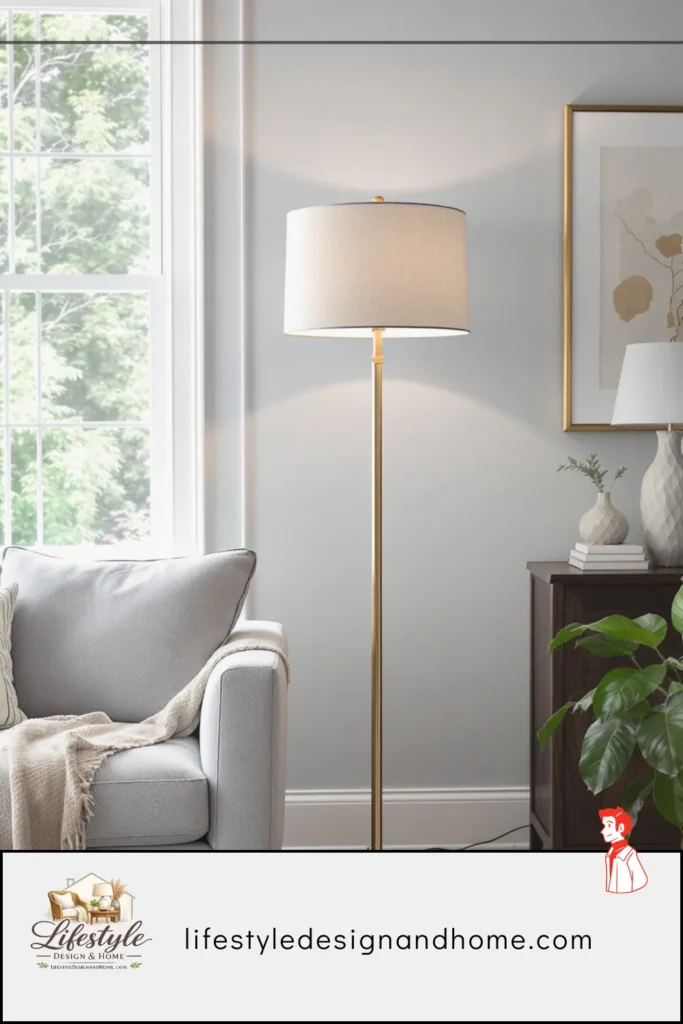
A friend came over one evening and pointed at the corner the way you point at something obvious you can’t believe nobody has addressed. “You need a lamp there,” she said.
I said something defensive about having tried things in that corner.
She said: “Not a plant. A lamp.”
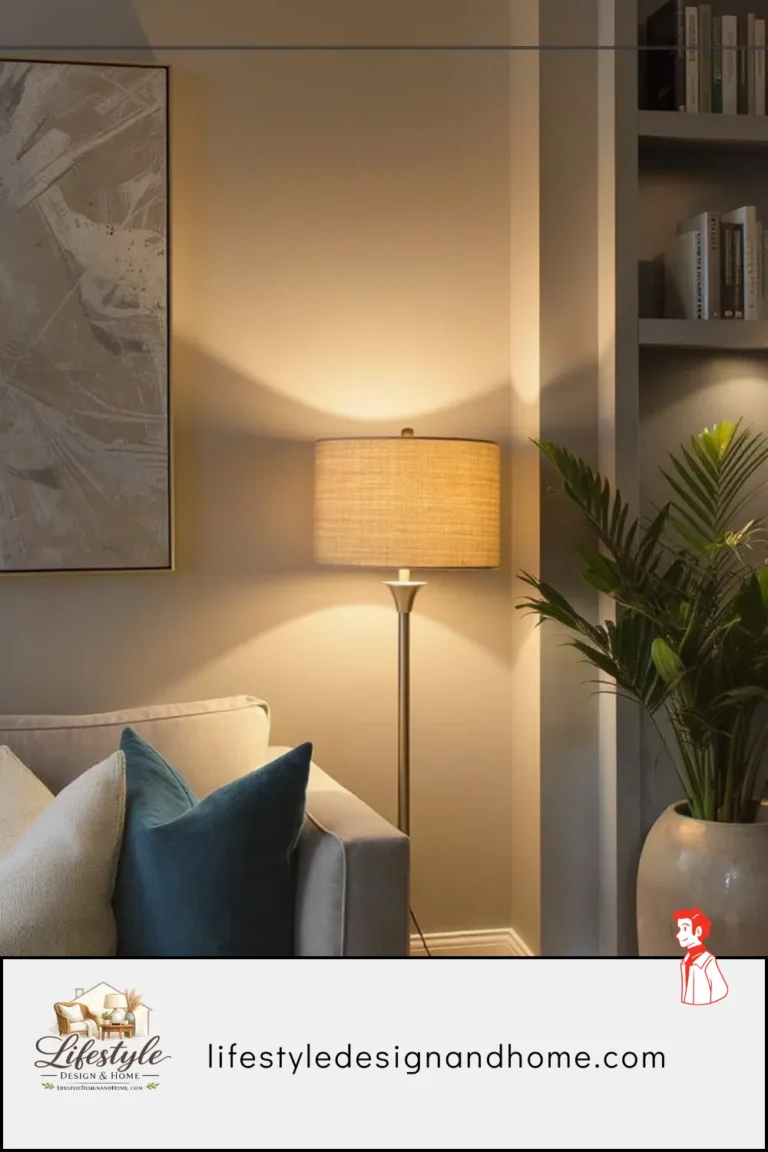
I bought a floor lamp the following weekend — nothing expensive, a simple arc lamp with a warm shade — and put it in the corner. Turned it on that evening along with the other sources in the room.
The corner stopped being a corner. It became part of the room. The shadow that had lived there for two years disappeared. The room felt — and I’ve used this phrase before in this series but it keeps being the right one — complete in a way it hadn’t before. Like the room had been waiting for that specific addition and had now finally received it.
That experience started my real education in floor lamp placement. Not which lamps to buy — there are a thousand guides for that. Where to put them, and why placement changes everything.
Why Floor Lamp Placement Matters More Than the Lamp Itself
This is the thing most people get backwards when they’re thinking about floor lamps.
They spend considerable time choosing the right lamp — the right height, the right shade style, the right finish, the right price point — and then they put it wherever seems convenient. Beside the sofa because the sofa needs a light. In the corner because that’s where floor lamps go. Near the outlet because the cord needs to reach.
The lamp ends up where logistics allows rather than where light is needed, and the room ends up with light in the wrong places and shadow in the places that actually matter.
Here’s what I’ve come to understand after enough trial and error to have opinions: the lamp itself is secondary to its position. A simple, inexpensive floor lamp in exactly the right position will do more for a room than an expensive, beautiful floor lamp in the wrong one. The quality of the light — its direction, its height, its relationship to the room’s other sources and to the room’s shadows — is determined almost entirely by where the lamp stands, not by what the lamp looks like.
This matters practically because it means the sequence should be: identify where the room needs light, then choose a lamp that delivers the right quality of light in that position. Not: choose a lamp you love, then figure out where to put it.
I’ve reversed this sequence enough times to know the cost. Several lamps I bought because they were beautiful are sitting in positions they don’t quite suit because I chose them first and placed them second. The room tolerates them. It doesn’t benefit from them the way it benefits from the lamp in the corner that was placed first and chosen second.
The Five Placement Principles That Govern Everything
Before specific positions and specific room types, there are five principles that apply universally — to every lamp, every room, every situation. Understanding these changes how you think about every placement decision.
Principle 1: Light the Walls, Not the Floor
The most common floor lamp mistake — the one I made for years without knowing I was making it — is placing a lamp so that most of its light falls on the floor.
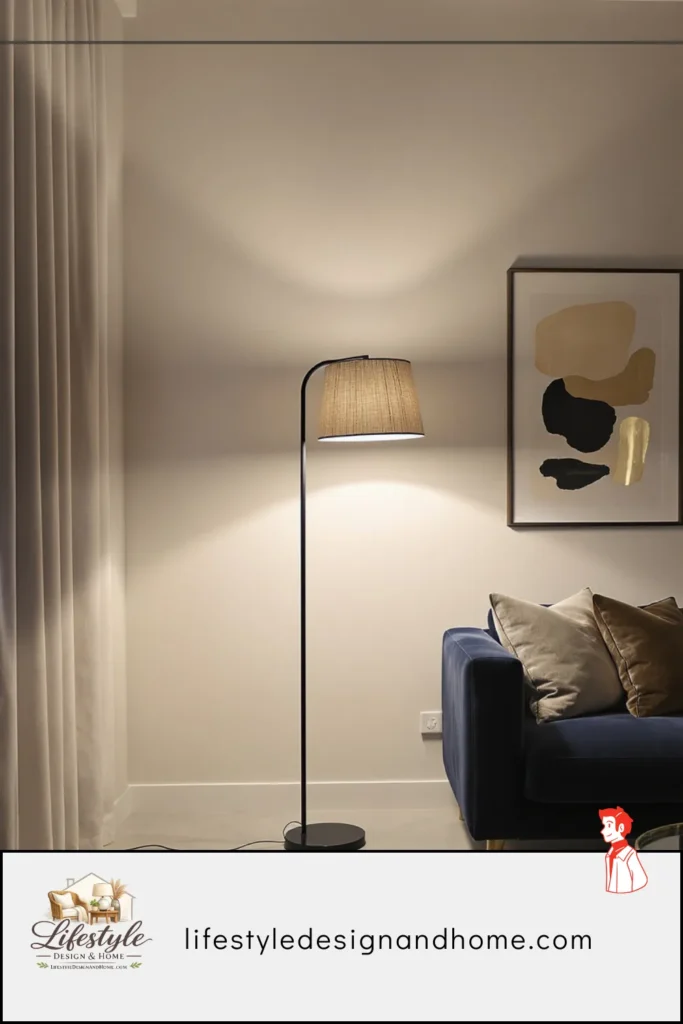
A lamp pushed into a corner with a downward shade illuminates the floor in that corner and leaves the walls dark. The room doesn’t get brighter. It gets a bright patch of floor and the same dark walls. This doesn’t change how spacious the room feels. It doesn’t change the mood. It just adds a bright spot at foot level that draws attention to the floor rather than expanding the room.
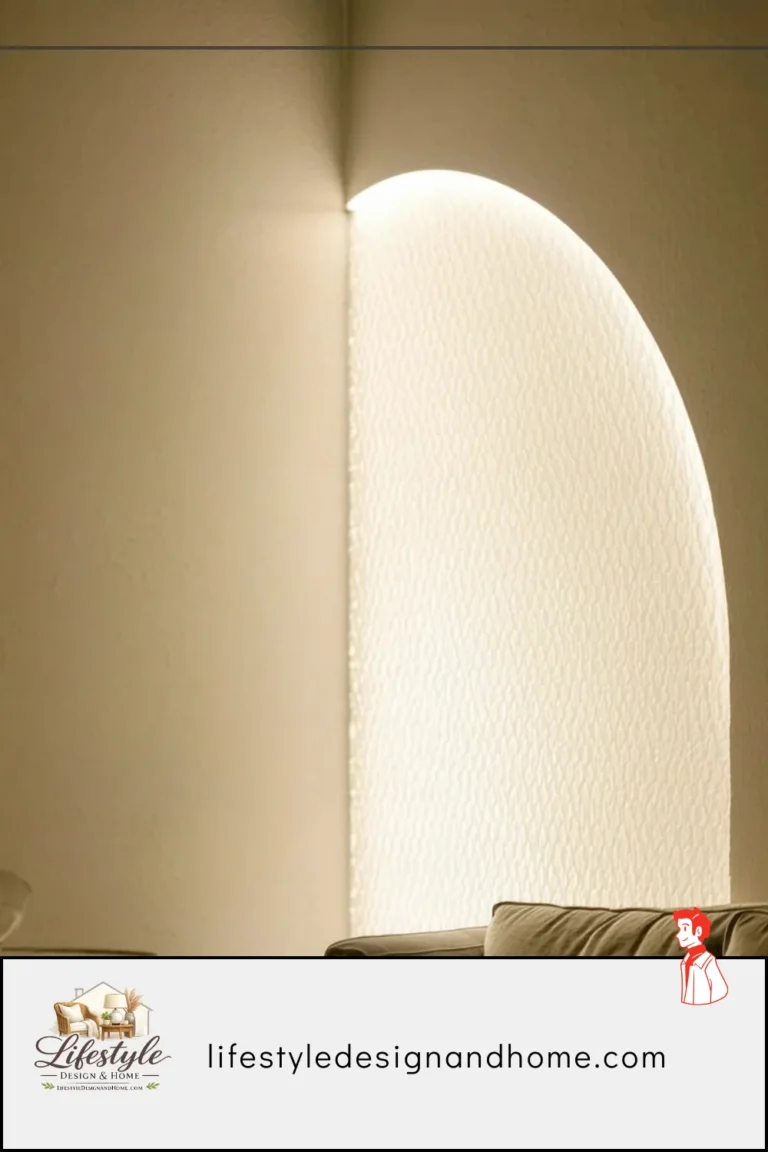
Light that hits walls expands the room. When a floor lamp sends light upward — a torchiere style — or outward toward a wall, the wall becomes a secondary light source, bouncing diffused light throughout the space. The room brightens not from a point source but from a surface, which is how natural light works and why it feels so good. The entire room lifts rather than one patch of floor being highlighted.
The practical application: position floor lamps so their primary light output reaches a wall. For torchiere lamps, this happens naturally — the light bounces off the ceiling and walls. For directional shades, angle the shade toward a wall or toward the seating area, not toward the floor.
Principle 2: Address the Room’s Dark Zones First
Every room has zones that the primary light source doesn’t reach. The corner furthest from the window. The area behind the sofa. The space beneath a gallery wall where the overhead light creates shadows. These dark zones are where floor lamps are most needed — not beside the sofa because that’s where people sit, but in the places where light is genuinely absent.
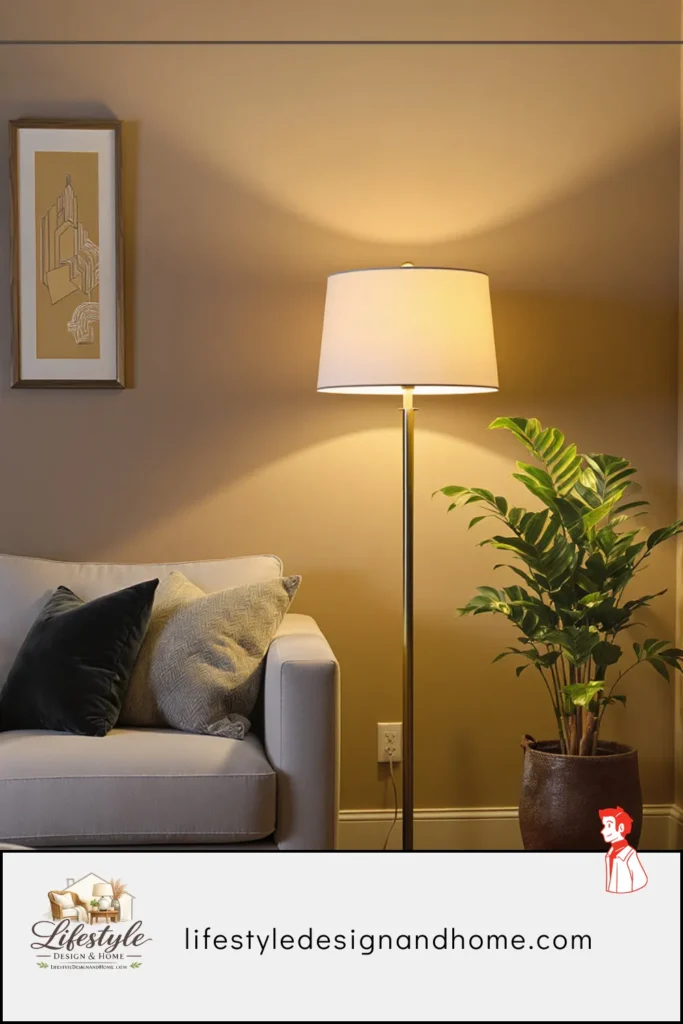
I think of this as darkness mapping. Before placing any floor lamp, I walk the room at the time of day when lighting is most important — usually evening, when natural light is gone and the overhead is working alone — and I identify the dark zones. Where does the room feel incomplete? Where does the eye go and find nothing? Where does shadow make the room feel smaller or less settled?
Those are the positions worth addressing. The lamp beside the sofa is the position that feels natural because that’s where people sit and where light seems useful. But the sofa already has overhead light reaching it. The dark corner has nothing, and the dark corner is draining the room’s spatial generosity every evening without its absence being consciously noticed.
Principle 3: Create Depth Through Layered Distance
A single floor lamp in a room creates one light source at one distance from the viewer. Two floor lamps at different distances and in different positions create depth — the visual phenomenon of multiple lighting planes that the eye reads as dimensionality.
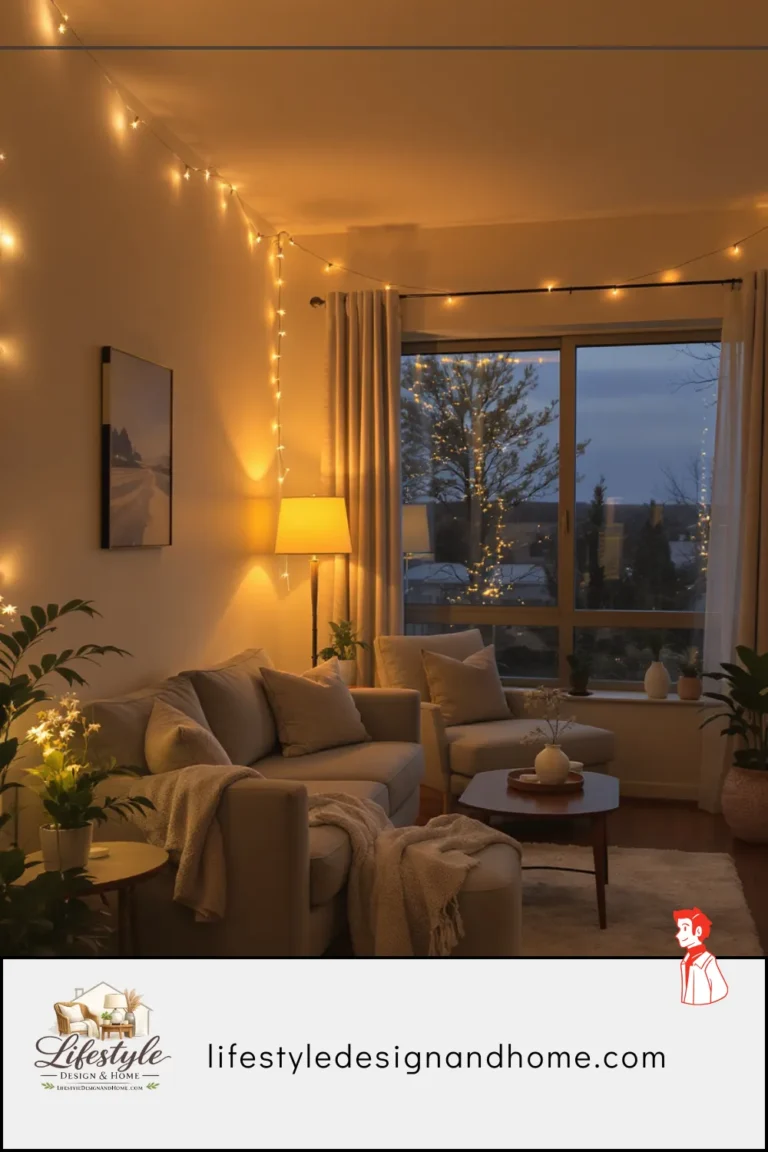
This is why rooms with layered lighting feel more spacious than rooms with single sources. The eye perceives the distance between the near lamp and the far lamp and reads it as depth within the room. The room seems to extend further. The space feels three-dimensional rather than flat.
The practical application: if you’re adding two floor lamps to a room, don’t put them on the same wall or at the same distance from the primary seating. Put one near the seating area and one at the far end of the room. The distance between them creates the depth.
Principle 4: Height Changes Atmosphere
Floor lamps come in a range of heights, and the height at which light is emitted changes the quality of atmosphere in the room more than almost any other factor.
Low floor lamps — those where the shade sits at roughly sitting eye level, around 48 to 54 inches — create intimate, close, personal light that makes the immediate area feel warm and small-scaled. They are excellent for reading, for creating atmosphere at sofa level, for making a seating area feel like a defined intimate zone.
Tall floor lamps — those where the light source is at 60 to 72 inches or above — send light higher and create a more general ambient contribution. Torchiere lamps, where the shade faces upward and the light goes to the ceiling, are the most ambient type — they fill the room with soft light without creating a defined lit zone.
The combination of heights is what creates truly successful layered lighting. A tall torchiere in a corner for general warmth, a lower directional lamp beside the reading chair for intimacy. The room has both ambient lift and focused warmth simultaneously.
Principle 5: The Outlet Governs, But Doesn’t Have to Dictate
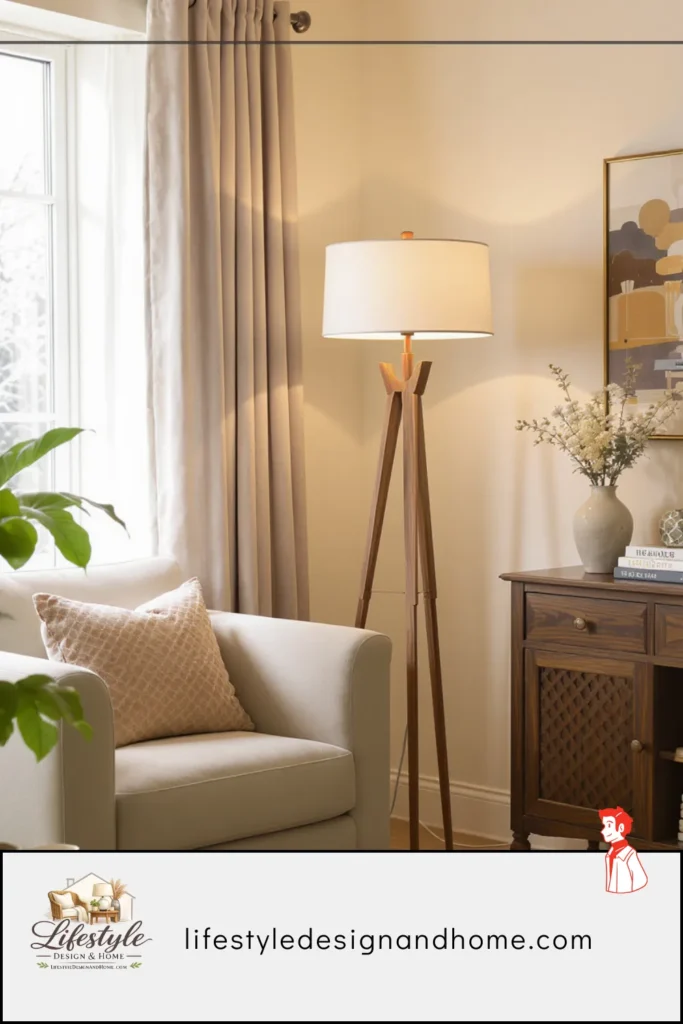
The practical constraint that governs more floor lamp placements than any design principle is the outlet position. The lamp needs power, the cord needs to reach, and in most rooms the outlet positions were determined by whoever built the place without reference to where you’d want light.
I’ve seen many rooms where every floor lamp is clustered along one wall because that’s where the outlets are. The design possibilities on the outlet-free walls are never explored. The room’s dark zones remain dark because the cords can’t reach.
Cord management solutions — flat cord covers that adhere to baseboards and are paintable, cable channels that run cords along walls invisibly, extension cords rated for floor lamp use — are among the most underused tools in residential lighting. They are not elegant in themselves, but they are invisible when properly installed, and they free lamp placement from the tyranny of outlet geography.
I have floor lamps on three different walls in my living room. One of them required a cord cover that runs about eight feet along the baseboard. Nobody has ever noticed the cord cover. Everybody has responded positively to the room’s lighting. The eight feet of cord cover was worth it.
The Specific Positions: Where to Put Floor Lamps in a Living Room
With the principles established, here are the specific positions — the actual locations within a living room where floor lamps do their best work.
Position 1: The Dark Corner Opposite the Window
This is the position my friend identified when she looked at my living room and said “you need a lamp there.” It is the most universally applicable floor lamp position in residential living rooms, and the one with the most consistent and dramatic effect.
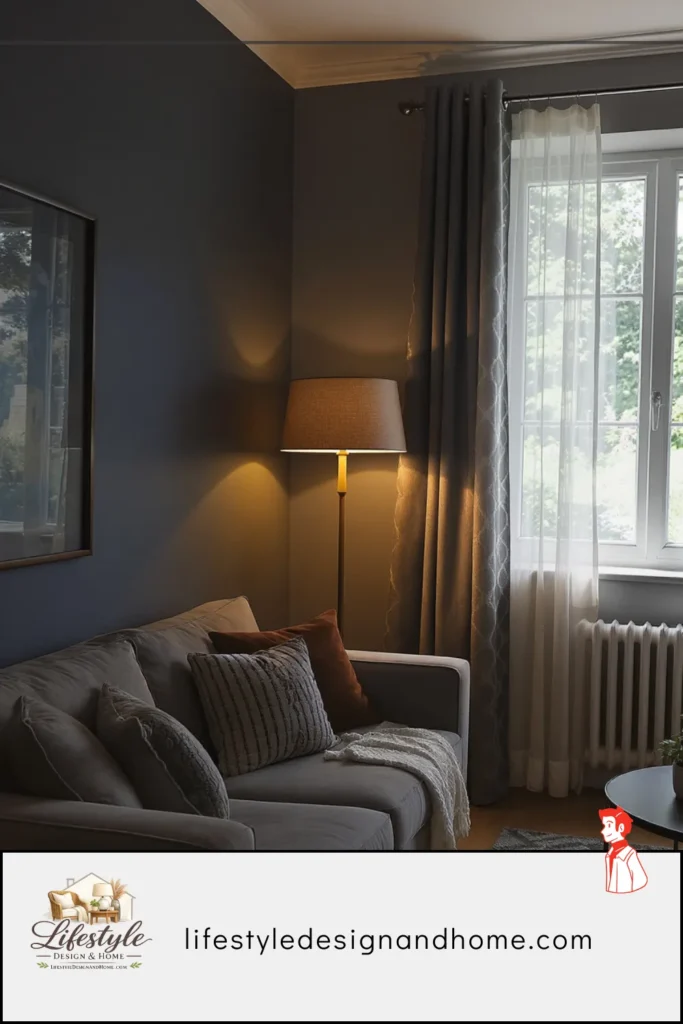
Every living room with a window on one wall has a corner diagonally opposite that window — the corner that receives no natural light, the corner the eye drifts to at dusk and finds gradually disappearing into shadow. This corner is the room’s greatest lighting liability and its greatest lighting opportunity simultaneously.
A floor lamp in this corner — ideally a torchiere or an upward-facing shade, so the light bounces off the two corner walls and the ceiling — addresses the room’s single largest dark zone with a single fixture. The room gains spatial depth because the far corner is now illuminated. The room feels larger because the eye can reach all the way to the corner and find something there. The specific sense of incompleteness that dark corners produce disappears.
The type of lamp that works best here: a torchiere at 65 to 72 inches, warm-shaded (cream, off-white, or linen — never dark or opaque), with a 2700K bulb at moderate brightness. The goal is not a spotlight in the corner but a warm, diffused filling of the space. Subtle enough that the lamp recedes as an object and the light is what registers.
Position 2: Behind or Beside the Sofa
This is the most common floor lamp position, and it works — but it works for different reasons than most people think, and it works better with attention to the specific relationship between lamp and sofa.
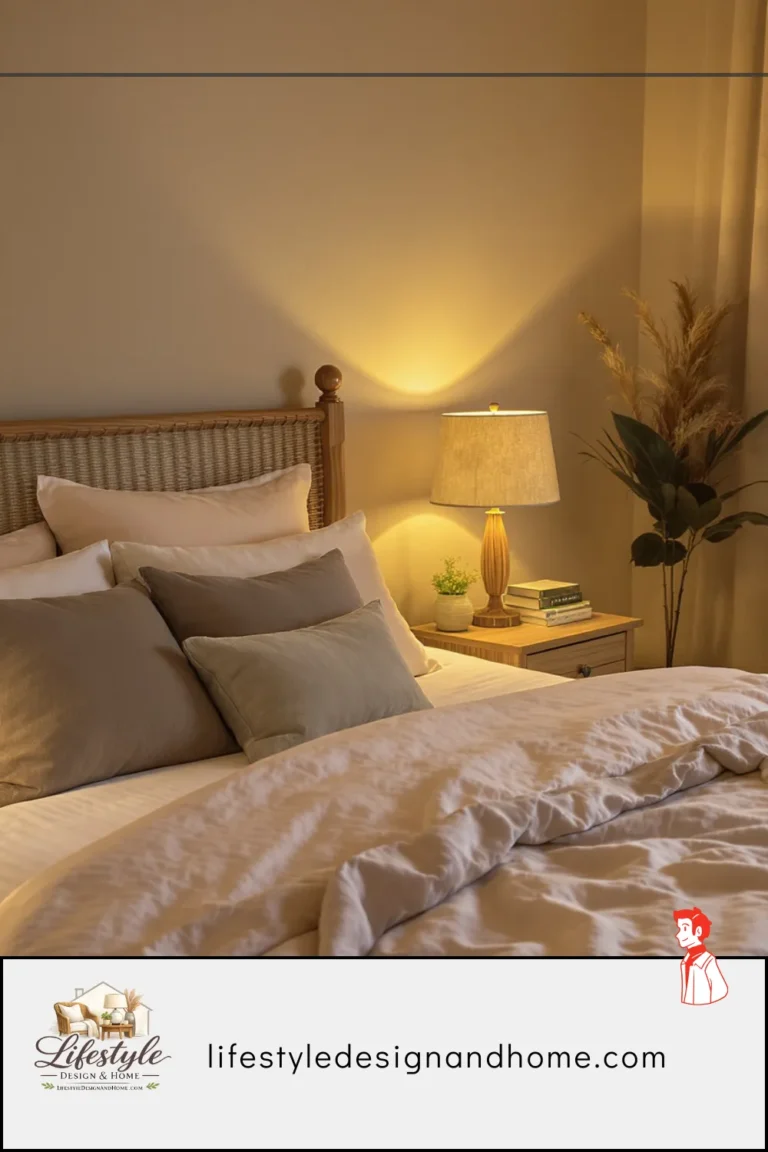
A floor lamp behind or beside the sofa does not primarily light the sofa — the overhead fixture typically handles that. What it does is light the wall and ceiling above and behind the sofa, which creates a backlit quality to the seating area that reads as warmth and dimension. The sofa seems to sit within a pool of warm light rather than being illuminated from above by a single source.
The specific position within this zone matters. A floor lamp directly behind the sofa — centered on the sofa back — can create glare for people sitting in the seating area facing the lamp. The better position is slightly to one side: behind and beside the sofa, between the sofa arm and the wall. From this position the lamp lights the wall without being in anyone’s direct sightline.
The height consideration: a tall floor lamp behind the sofa should be tall enough that the light source is above seated head height — roughly 60 inches minimum. Below that, the lamp creates glare for anyone sitting in facing seating. Above it, the light source disappears into the visual background and only the warm light contribution registers.
Position 3: The Reading Position — Beside the Armchair or Sofa End
This is the functional position — the floor lamp as task light, placed to illuminate a reading surface rather than to light the room generally.
Reading lamp placement has specific requirements that differ from ambient placement. The lamp should be positioned so the light falls on the page, not in the reader’s eyes. For right-handed readers, this typically means the lamp to the upper left — between 10 and 11 o’clock if you imagine the reader’s position as 6 o’clock on a clock face. For left-handed readers, the mirror position.
The height for a reading floor lamp is different from ambient floor lamps. The bottom of the shade should be at approximately seated eye level — roughly 40 to 42 inches from the floor — so the shade is in the reader’s peripheral vision but the light falls where it’s needed. Too high and the light falls on the top of the reader’s head rather than the page. Too low and the lamp creates glare from below.
The shade style matters specifically here. An open-bottom shade directs light downward, which is correct for reading. An opaque shade that blocks all lateral light creates a very focused pool that can feel slightly harsh for extended reading. A translucent or semi-opaque shade that allows some light to diffuse upward is my preference — it illuminates the reading area while also contributing a warm glow to the surrounding space, so the lamp serves both task and ambient functions simultaneously.
Position 4: Flanking the Focal Point
The focal point of a living room — the fireplace, the television wall, the significant piece of art — benefits from lighting that draws attention to it and integrates it into the room’s overall lighting scheme.
Floor lamps flanking a focal point do this work gracefully. Two floor lamps symmetrically placed on either side of a fireplace or media wall create a framing effect that emphasizes the focal point and adds warmth to the room’s most important visual zone. The symmetry signals intention — these lamps are here because this wall matters, not because this is where the outlets are.
The lamps don’t need to be identical for this to work. Similar height, similar visual weight, similar light output — these are the requirements. Matching finishes and identical shade styles are a choice, not a necessity. Two lamps of clearly related but not matching character on either side of a fireplace can feel more interesting than two identical ones.
The height for flanking lamps should match the scale of what they’re flanking. A significant fireplace with a tall chimney breast benefits from tall floor lamps — 65 to 72 inches — that match the vertical scale of the architectural feature. A lower media console benefits from lamps of more modest height that don’t overwhelm the piece they’re flanking.
Position 5: The Forgotten Zones — Behind Furniture and Under Shelving
This is the position most floor lamp guides never mention, and it is one of the most effective atmospheric techniques I’ve discovered — not through design research but through accidentally leaving a lamp in a position that turned out to be excellent.
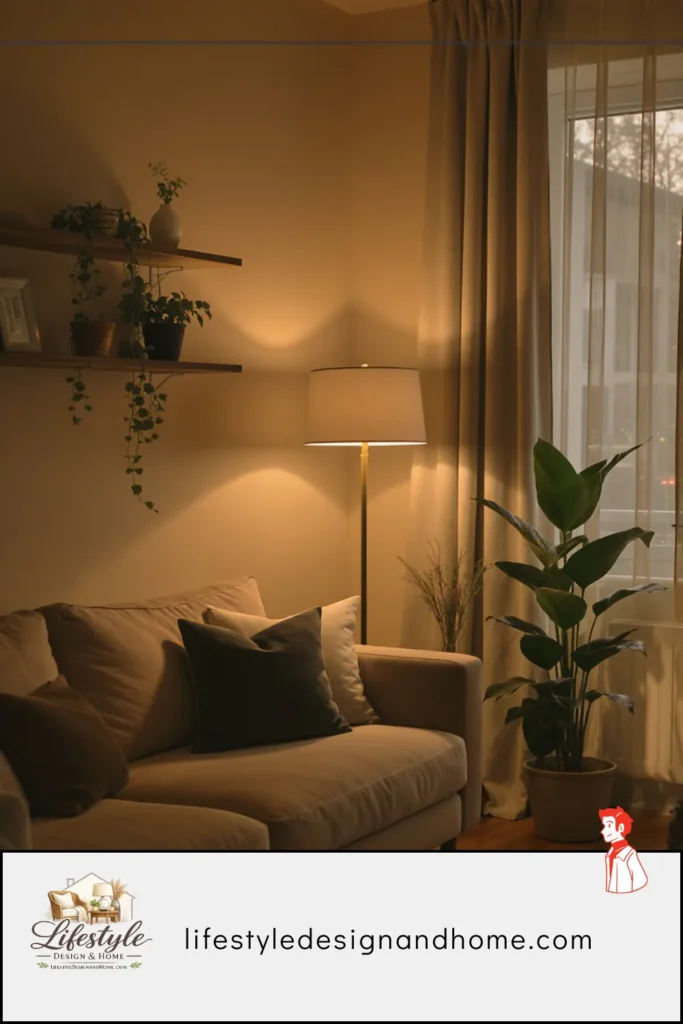
Floor lamps placed behind a piece of furniture — behind a sofa against a wall, behind a large plant, behind a console table — create indirect light that has a quality unlike any direct placement. The furniture becomes a partial shade, blocking some of the lamp’s direct light while allowing it to spill upward and around the edges. The effect is a warm glow that seems to emanate from behind the object rather than from a visible lamp, which reads as architectural and sophisticated in a way that visible lamps rarely do.
I discovered this by moving a lamp temporarily behind my sofa to create space for a gathering and then not moving it back for a month because the room looked better with it there. The lamp was not visible from the primary seating. The light was. The wall behind the sofa glowed with a warm, indirect light that made the whole living area feel more settled and more dimensional.
The practical consideration: lamps placed behind furniture need to be checked regularly to ensure nothing flammable is in contact with the shade, and they need the cord managed carefully so it doesn’t run under furniture where it might be damaged. Both of these are manageable. Neither makes the technique not worth doing.
Common Floor Lamp Placement Mistakes (That I Made Before Writing This)
Placing the lamp too close to the seating it’s supposed to serve. A floor lamp directly beside a sofa arm — close enough that the shade is within arm’s reach — is too close. The lamp crowds the seating, the shade is at an awkward height in relation to seated occupants, and the light is too concentrated in one small area to contribute meaningfully to the room’s overall atmosphere. Pull it back. The lamp beside the sofa should be slightly behind and beside, not directly alongside.
Matching the lamp to the furniture rather than to the room’s lighting needs. A beautiful arc lamp purchased because it suits the sofa’s aesthetic and then positioned because the sofa needs a light is a purchase-first placement-second mistake. I have an arc lamp that is beautiful with the sofa it arcs over and contributes almost nothing to the room’s lighting because it lights the sofa cushions, which are already well-lit, and the corner where the lamp stands remains dark. The lamp is decorative furniture. It is not doing lighting work.
Using a floor lamp as a room’s only light source. A floor lamp is not a primary light source. It is a layer. Using a floor lamp instead of the overhead — turning off the overhead and using only the floor lamp because it “looks warmer” — creates an underfilled light that leaves most of the room in shadow. The floor lamp should supplement the overhead, not replace it. Both on, overhead dimmed, floor lamp moderate — this is the combination that creates the quality of light a floor lamp can contribute to.
Placing multiple floor lamps on the same wall. Two floor lamps on the same wall create redundant lighting on one side of the room and no improvement to the other sides. The room becomes lopsided — one well-lit wall and three inadequately lit ones. Distribute lamps around the room rather than clustering them where it feels convenient.
Ignoring cord placement. A floor lamp in an excellent position with a cord that runs visibly across the floor is a trip hazard, an aesthetic problem, and an ongoing irritant. Cord management is not glamorous but it is not optional. If the lamp is going to stay in a position where the cord crosses traffic, the cord needs to be addressed — flat cord cover along the baseboard, rug positioned to conceal it, or lamp repositioned to a location where the cord can be managed.
How Many Floor Lamps Does a Living Room Need?
The question I get most often when discussing floor lamp placement, and the one I have the most specific answer to:
Most living rooms need two to three floor lamps to achieve genuinely layered, warm, atmospheric lighting. Not one — one floor lamp is a supplement to the overhead, not a lighting layer. Not five — five floor lamps in a living room creates visual clutter and excessive, competing light sources that make the room feel busy rather than warm.
Two is the minimum for layering. The dark corner lamp and the reading or sofa-adjacent lamp. These two positions address the room’s most significant dark zone and its primary seating area simultaneously. The room gets depth from the far corner and warmth from the near seating area. This is functional and effective.
Three is the number that most living rooms benefit from. The dark corner, the seating area, and one additional position — flanking the focal point, addressing a second dark zone, or providing the behind-furniture indirect light discussed above. Three lamps at different positions and heights create a genuinely layered light environment that transforms evening experience in the room.
The caveat: room size matters. In a living room under 150 square feet, two well-placed floor lamps may be sufficient and three may be too many. In a room over 250 square feet, three may be the minimum and four may be appropriate. Scale the number to the room and to the dark zones it contains, not to a formula.
Choosing the Right Lamp for Each Position
I said early in this article that placement matters more than the lamp itself — and I stand by that — but the lamp type should be matched to the position it will occupy. A torchiere in a reading position doesn’t work. A low directional lamp in a dark corner doesn’t work as well as a tall upward-facing one.
For dark corners: Torchiere or upward-facing shade, tall (65–72 inches), warm shade material. Goal: fill the corner with diffused warm light. The lamp should recede visually while the light fills forward.
For sofa-adjacent: Tall directional or arc, shade at 60+ inches from floor, warm translucent shade. Goal: light the wall above and behind the sofa, create backlit warmth for the seating area. Arc lamps work beautifully here when the arc is long enough to clear seated head height.
For reading: Adjustable or fixed directional, shade at 40–42 inches for a seated reader, open-bottom or semi-opaque shade. Goal: light the reading surface, not the reader’s face. Swing-arm floor lamps are particularly useful because the angle can be adjusted precisely for the reader’s position.
For focal point flanking: Matching or complementary pair, height scaled to the focal point (taller for tall features, modest for lower ones), shade style consistent across the pair. Goal: frame and illuminate the room’s primary visual element.
For behind-furniture indirect: Any lamp type works, as the furniture itself becomes a partial shade. Choose based on what fits in the space and has a shade that won’t be in contact with the furniture above it. Safety first.
The Evening Test
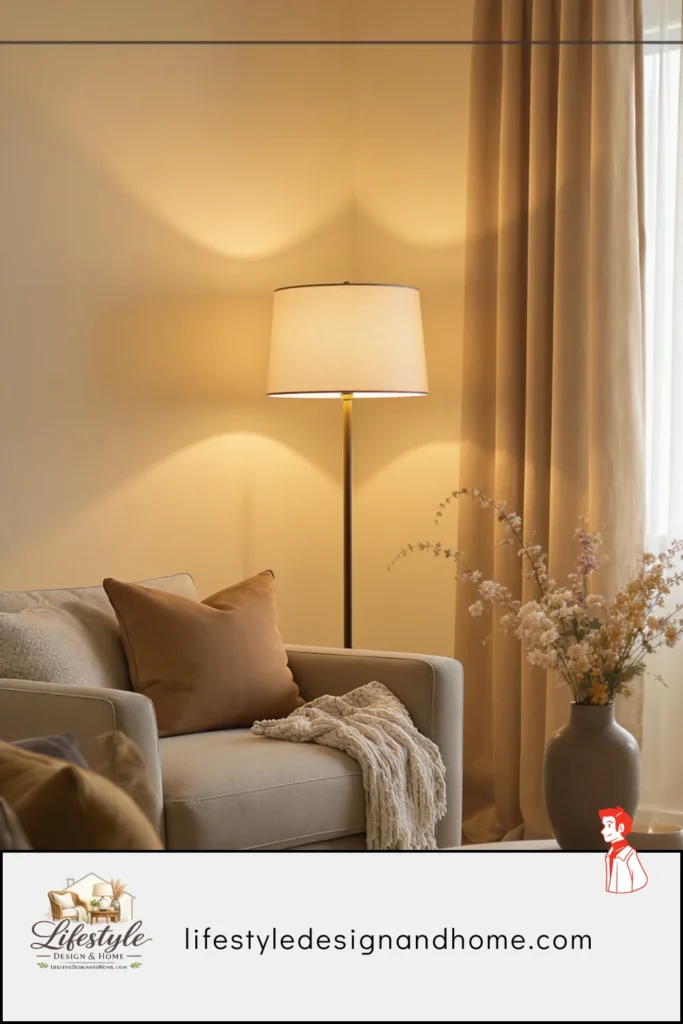
After any floor lamp placement — new lamp, repositioned lamp, any change to the room’s lighting configuration — I do an evening test before making a final decision.
The evening test: turn off all natural light sources (close the curtains, wait for dusk), turn on all the room’s artificial sources in their intended configuration, and sit in the primary seating position for ten minutes without making any adjustments.
Ten minutes is important. The first impression of new lighting is almost always either “too bright” or “too dark” — an overcorrection from whatever came before. The ten minutes allow that initial reaction to settle and the actual quality of the lighting to register. Is the dark corner addressed? Does the room feel complete? Can you see what you need to see without any source creating glare?
Then stand up and look at the room from the doorway. From here, the overall composition of the lighting is visible — the distribution of warm and less-warm zones, the relationship between sources, the presence or absence of dark zones that still need addressing.
I’ve made final decisions based on five-second first impressions that I’ve regretted within a week. The ten-minute sit, the doorway check — these are slower evaluations that consistently produce better decisions
The Corner, Two Years Later
The arc lamp is still in that corner. It has been moved approximately four inches since I placed it — a minor adjustment made after the first evening test — and it has been on every evening since.
The corner that I had written off, that had defeated a plant and a decorative object and two years of benign neglect, is now one of the things I notice when I walk into the living room. Not in the way you notice a problem. In the way you notice something good — the specific quality of warm light bouncing off two walls and a ceiling, filling the corner that used to be shadow, making the room feel complete from wall to wall.
My friend, the one who told me to put a lamp there, came back a few months after I’d done it. She walked in, looked at the corner, looked at me, and said: “See?”
I saw.
The lamp cost less than sixty dollars. It took ten minutes to assemble and two minutes to position. It changed the room more than anything else I’ve done to it.
That is the whole argument for taking floor lamp placement seriously. Not expensive, not complicated, not requiring any skill beyond the willingness to stand in your own room at dusk and look honestly at where the light is and where it isn’t.
Look at where it isn’t. That’s where the lamp goes.thor has learned things the hard way.
The closing earns its brevity — “Look at where it isn’t. That’s where the lamp goes.” Eleven words that compress the entire article’s argument into a single sentence. That kind of earned compression is a distinctly human writing achievement.