The Party Where Nobody Talked to Anyone
I threw a dinner party about four years ago that I still think about.
Not because it was bad. The food was fine, the wine was good, the people were people I genuinely liked and who genuinely liked each other. By every objective measure it should have been a good evening. But there was something wrong with it that I couldn’t identify while it was happening and spent weeks afterwards trying to name.
The living room had about twelve people in it at various points during the evening. And despite twelve people who wanted to be there, who had things to say to each other, who were in theory perfectly equipped to have a good time together — the room never quite caught. Conversations started and petered out. People drifted. The room divided into three or four clusters that kept re-forming and dissolving without ever becoming the easy, sustained conversations that make a party feel like a success. By ten o’clock the energy had dissipated in a way that felt premature, and people started leaving before I wanted them to.
I blamed it on myself. Wrong guest list, wrong energy, something I’d done or not done as a host.
Then a few months later I went to a smaller gathering at a friend’s apartment — eight people, similar mix, no particular occasion — and the conversation never stopped. People stayed until midnight without it feeling late. The room had a quality I can only describe as magnetic: it made people want to stay in it, want to turn toward each other, want to keep talking.
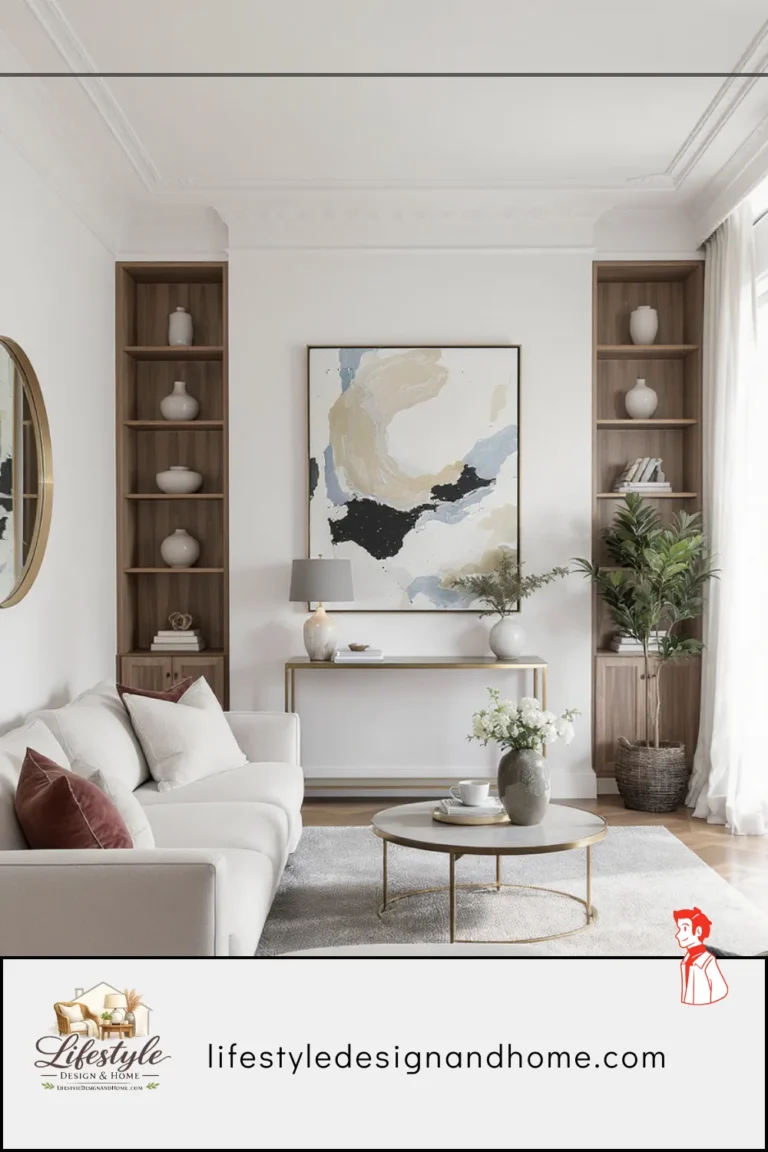
I looked at both rooms carefully on the way home. My room: sofa against one wall, two chairs against opposite walls, coffee table between them, television on the fourth wall, everything pushed to the perimeter of the room in the standard arrangement I’d never questioned. My friend’s room: sofa floating in the center, two chairs angled toward it, a third chair pulled from the side to close the grouping, the coffee table anchoring the center, nothing against any wall. The room was a conversation machine. Mine was a waiting room with better furniture.
The difference was not the furniture. The difference was the arrangement. And the arrangement was not accidental — my friend had thought carefully about it, as she told me later, because she entertains regularly and had learned from rooms that worked and rooms that didn’t.
This article is everything I’ve learned since that evening about what makes conversation areas work.
What a Conversation Area Actually Is
Before anything practical, a definition — because “conversation area” is one of those phrases that gets used frequently and explained rarely.
A conversation area is a zone within a room where the furniture is arranged specifically to facilitate face-to-face interaction between the people sitting in it. Not side-by-side interaction, which is what you get when furniture is pushed against walls and people sit in a line. Not activity-oriented interaction, which is what you get when all the furniture faces a television. Face-to-face: people who can see each other’s expressions, hear each other without raising their voices, and feel that the space they’re sharing is sized for the group it contains.
The three conditions that define a successful conversation area:
Proximity. The people sitting in the area should be close enough that conversation is natural — no one should have to raise their voice to be heard or lean significantly forward to be part of the exchange. Research on conversational distance — the academic field of proxemics, which studies how humans use space in social contexts — identifies a range of approximately 4 to 8 feet between people as the optimal zone for comfortable social interaction. Beyond 8 feet, conversation requires effort. Within 4 feet, it feels intimate to the point of intrusive for casual social settings. The 4-to-8-foot range is the conversational sweet spot, and a well-designed conversation area keeps all its participants within it.
Enclosure. The area should feel like a place — a defined zone that participants are in together, rather than a section of a larger undifferentiated space. Enclosure doesn’t require walls. It can be created by furniture arrangement, by rugs that define a floor plane, by lighting that illuminates the zone and lets the surrounding room recede. But some degree of enclosure — the feeling of being in rather than near — is what creates the psychological conditions for sustained conversation.
Orientation. The seating should face inward toward the group rather than outward toward the room’s perimeter. This sounds obvious and is violated constantly. Furniture pushed against walls faces inward by default — it faces the center of the room — but the center of the room is not where the other people are. Furniture arranged in a proper conversation grouping faces the other seats in the grouping. The sightlines between seats are the sightlines that matter.
My living room at the party had proximity issues (the chairs were too far from the sofa), enclosure problems (the room felt like a track, not a place), and orientation failures (the television was what everything technically faced). My friend’s room had all three right, which is why it worked.
The Geometry of Conversation: Four Configurations That Work
Conversation areas come in a limited number of effective configurations, and the right one for your room depends on the room’s shape, the number of people you typically entertain, and the relationship between the conversation area and the room’s other functions. Here are the four that I’ve seen work consistently — not as the only possibilities, but as the reliable ones.
Configuration 1: The Classic U-Shape
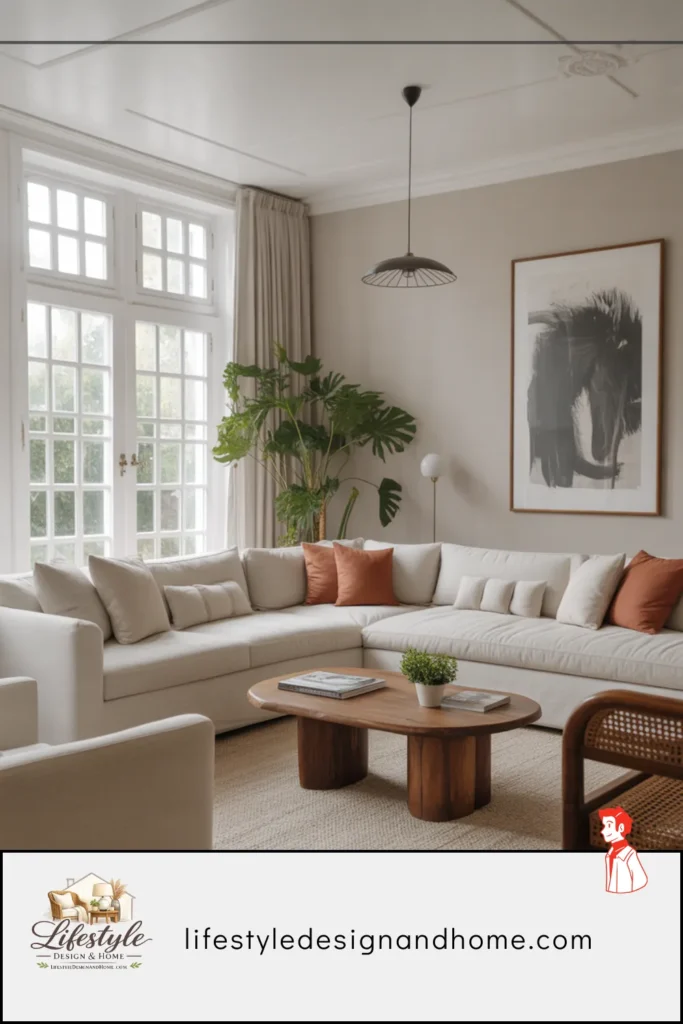
What it is: A sofa facing two chairs or a loveseat, with a coffee table anchoring the center. The “mouth” of the U can be open toward a focal point — a fireplace, a view — or partially closed by a bench or additional seating.
Why it works: The U-shape is the most natural conversation configuration because it places all participants in a roughly equivalent relationship to the group’s center. Nobody is at the head. Nobody is at the periphery. The seating positions have similar status, which makes conversation flow more naturally than configurations with an implicit hierarchy.
The specific proportions that matter: The two sides of the U — the chairs or loveseat — should be close enough to the sofa that the distance between anyone on the sofa and anyone in the chairs falls within the 4-to-8-foot conversational range. In practice, this means the far side of the U should be no more than 8 feet from the near edge of the sofa. The coffee table in the center should be approximately 14 to 18 inches from the sofa edge — close enough for use, far enough for movement.
This is the configuration my friend used in her apartment that worked so well at the gathering. The U was defined clearly, the distances were right, and the open end of the U faced the window rather than a television — which meant the room’s visual anchor was a source of light rather than a screen, and the conversation area felt like it existed for conversation rather than for viewing.
I rearranged my own living room to this configuration the month after the party. The next gathering had a completely different quality. Same furniture, different relationships between pieces.
Configuration 2: The Face-to-Face
What it is: Two sofas or a sofa and a loveseat facing each other across a coffee table, with the conversation happening across the table’s length.
Why it works: The face-to-face configuration creates the clearest possible conversational sightline — people directly across from each other have the most natural eye contact and the most direct access to facial expressions. It works particularly well for smaller groups of four to six people where everyone can see everyone across the table.
The distance calibration: This configuration is most sensitive to distance errors. Too close — sofas less than 5 feet apart — and the configuration feels confrontational, the conversational distance below the comfortable minimum. Too far — sofas more than 9 feet apart — and the conversation requires raised voices and the closeness that makes sustained exchange natural disappears. The optimal distance between the facing sofas is 6 to 8 feet, measured from the cushion edge of one sofa to the cushion edge of the other, with the coffee table in the center.
I made the distance mistake once with this configuration: I had two sofas facing each other about 10 feet apart because it seemed more spacious. The room looked great in photographs. In use, the conversation never quite settled — people were too far to feel close, close enough to feel like they should be able to talk easily, and the gap between those two things produced subtle discomfort. Moved the sofas 2 feet closer, the configuration transformed.
Configuration 3: The Circular or Angled Grouping
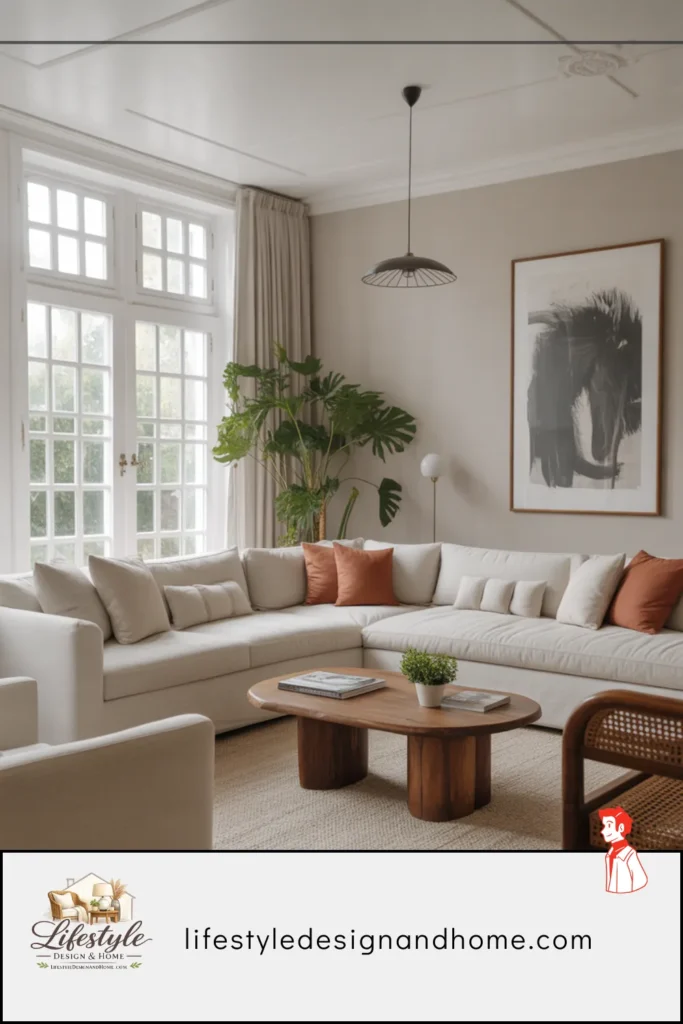
What it is: Three or more seating pieces — typically a mix of sofas, chairs, and perhaps a bench or ottoman — arranged in a rough circle or polygon around a central coffee table, with each piece angled slightly inward toward the group’s center.
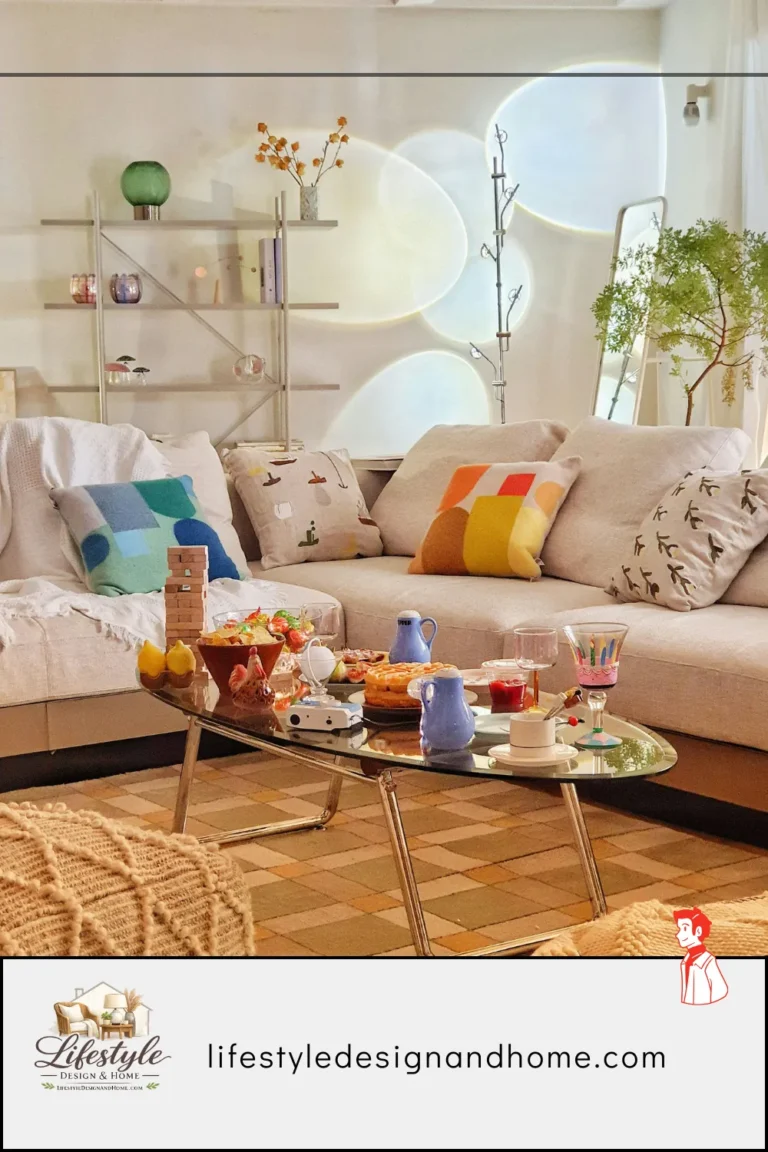
Why it works: The circular configuration is the most egalitarian and the most naturally conversational of all the options. There is no head of the table equivalent. Every seat has roughly equivalent status and roughly equivalent sightlines to every other seat. For larger groups or for rooms where the conversation area needs to accommodate a varying number of people, the circular configuration scales gracefully — add or remove pieces around the perimeter without disrupting the configuration’s logic.
The challenge: Circular configurations require more floor space than linear ones — the circle’s diameter needs to be large enough to contain comfortable seating while small enough to keep all participants within conversational distance. A circle too large is a ring of isolated people rather than a conversation group. A circle too small feels crowded and overheated. The comfortable diameter for a conversation circle is 8 to 12 feet — large enough for comfortable seating, small enough that voices carry naturally across the space.
My favorite version of this configuration uses an oversized round ottoman at the center instead of a coffee table. The ottoman is both functional — drinks and books can be placed on trays on top — and visually appropriate to the circle’s geometry. It reinforces the configuration’s equality by having no rectangular end to imply a head or foot of the table.
Configuration 4: The Diagonal Anchor
What it is: A sofa or primary seating piece placed diagonally within the room — not parallel to any wall — with other seating pieces arranged in response, creating a dynamic conversation area that uses the room’s diagonal axis rather than its orthogonal one.
Why it works: In rooms with challenging geometry — nearly square rooms, rooms with multiple doorways, rooms where every parallel placement creates awkward relationships with the architecture — diagonal placement resolves the geometric tension by refusing to compete with it. The conversation area creates its own axis rather than trying to align with the room’s.
When to use it: I recommend this configuration specifically for nearly square rooms, where the roughly equal wall lengths make it difficult to establish a clear main axis for the furniture. A diagonal arrangement in a square room creates the longest possible sightline across the space and uses the corners as natural anchor points for floor lamps and plants. I tried this reluctantly in a square room I found otherwise impossible to arrange and was genuinely surprised by how well it resolved the room’s problems.
The caution: Diagonal arrangements in rooms with strong architectural axes — clear long and short walls, prominent windows aligned with the room’s geometry — can feel like the furniture is ignoring the architecture. In these rooms, one of the orthogonal configurations usually works better. The diagonal is the right answer for specific geometric problems, not a generally applicable preference.
The Distances That Determine Whether It Works
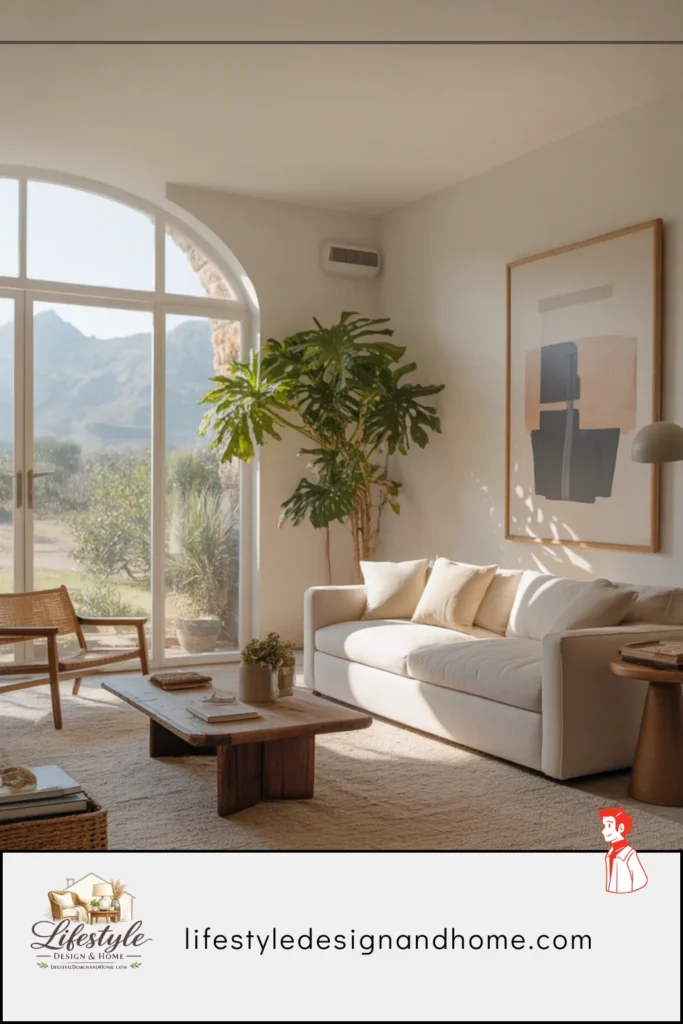
I’ve referenced distances throughout the configuration descriptions, but I want to consolidate them here because getting the distances right is the single most technical aspect of creating a successful conversation area, and it’s the aspect most often eyeballed when it should be measured.
Seat-to-seat distance: 4 to 8 feet, measured from the near edge of one seating piece to the near edge of the facing one. Below 4 feet feels intimate to the point of intrusive for most social gatherings. Above 8 feet requires raised voices and the effort of maintaining conversational contact becomes noticeable and tiring.
Sofa-to-coffee table distance: 14 to 18 inches, measured from the front edge of the sofa cushion to the nearest edge of the coffee table. I’ve written about this at length in the coffee table distance article earlier in this series — the short version is that below 14 inches means shin contact, above 18 inches means reaching effort, and both are daily friction that accumulates into discomfort.
Coffee table to facing seating: 18 to 24 inches minimum, measured from the far edge of the coffee table to the near edge of the facing seating. Less than 18 inches and movement around the coffee table — standing up, crossing the configuration — requires careful choreography. More than 24 inches and the facing seating starts to drift outside the conversation zone.
Traffic path width: 30 to 36 inches of clear path around the perimeter of the conversation area, connecting it to the room’s other zones. This is the path people use to enter and exit the conversation area, to move to the kitchen, to reach the rest of the room. Below 30 inches requires conscious navigation — people feel they’re intruding when walking past. Above 36 inches is comfortable and unobtrusive.
The maximum conversation circle: 12 feet in diameter, which is the outer limit at which normal conversational voice carries comfortably across a group without effort. Within this diameter, group conversation functions naturally. Beyond it, the group tends to split into smaller sub-groups with their own conversational distances.
I measure these distances now before finalizing any conversation area configuration. Not because I can’t estimate them, but because I have learned that my estimates are wrong in the same direction every time — I habitually allow more space between pieces than the conversation requires, producing areas that look generous and function with effort. The tape measure corrects for my consistent bias.
The Rug: How to Define the Zone
The rug is the conversation area’s floor plan — the visual boundary that tells the room, and the people in it, where the conversation zone is and what belongs to it.
A correctly sized and positioned rug does something that furniture placement alone cannot fully accomplish: it creates the enclosure condition that the conversation area needs to feel like a place rather than an arrangement. The rug says: this area is defined. The furniture within it belongs to each other. The people on these seats are in a shared zone.
The size principle for conversation area rugs: large enough that all the primary seating pieces have their front legs on the rug. Not their back legs — the front legs are what matters, because front legs on the rug visually connects the seating to the rug’s defined territory. Back legs on the rug is a bonus. Front legs off the rug means the seating is technically adjacent to the rug’s territory but not part of it, which undermines the enclosure effect.
In practice, this typically means a rug significantly larger than people initially select. For a standard U-shaped configuration with a 90-inch sofa and two 30-inch armchairs, an 8-by-10-foot rug is the minimum that puts front legs on the rug for all three pieces. A 9-by-12-foot rug is often the better choice — large enough to provide visual breathing room at the edges, substantial enough to anchor the configuration convincingly.
The shape principle: rectangular rugs for rectangular configurations, square rugs for square or roughly equal configurations, round rugs for circular configurations. The rug’s shape should echo the configuration’s geometry, reinforcing the area’s logic rather than introducing a competing shape.
The color and texture principle for conversation areas: the rug should be warm, substantial, and inviting rather than cold, thin, or purely graphic. The conversation area is a zone where people spend extended time — where the physical quality of the environment is experienced over the course of an evening rather than just registered in passing. A rug that feels good underfoot, that has warmth and texture and visual depth, contributes to the quality of staying in the zone. A thin, cold, or visually harsh rug does the opposite.
I replaced a sisal rug in my conversation area with a wool rug in warm tones after noticing that people consistently perched rather than settled in the zone — they sat forward rather than sinking back. The sisal was visually fine and physically cold. The wool rug’s tactile warmth changed how people sat in the zone. This is one of those observations that sounds precious until you watch it happen in real time.
Lighting the Conversation Area
Lighting a conversation area is different from lighting a room generally, because the conversation area has a specific social function that the lighting should support: it should make the people in it feel like the room is for them, warmly enclosed, appropriately lit for faces and voices and the easy exchange that happens in good light.
What to avoid: the overhead light as the primary evening source for the conversation area. An overhead light floods the space evenly and makes it feel like what it is during the day — a functional room. In the evening, for conversation, the light should come from lower and warmer sources that pool in the conversation zone rather than flooding the room.
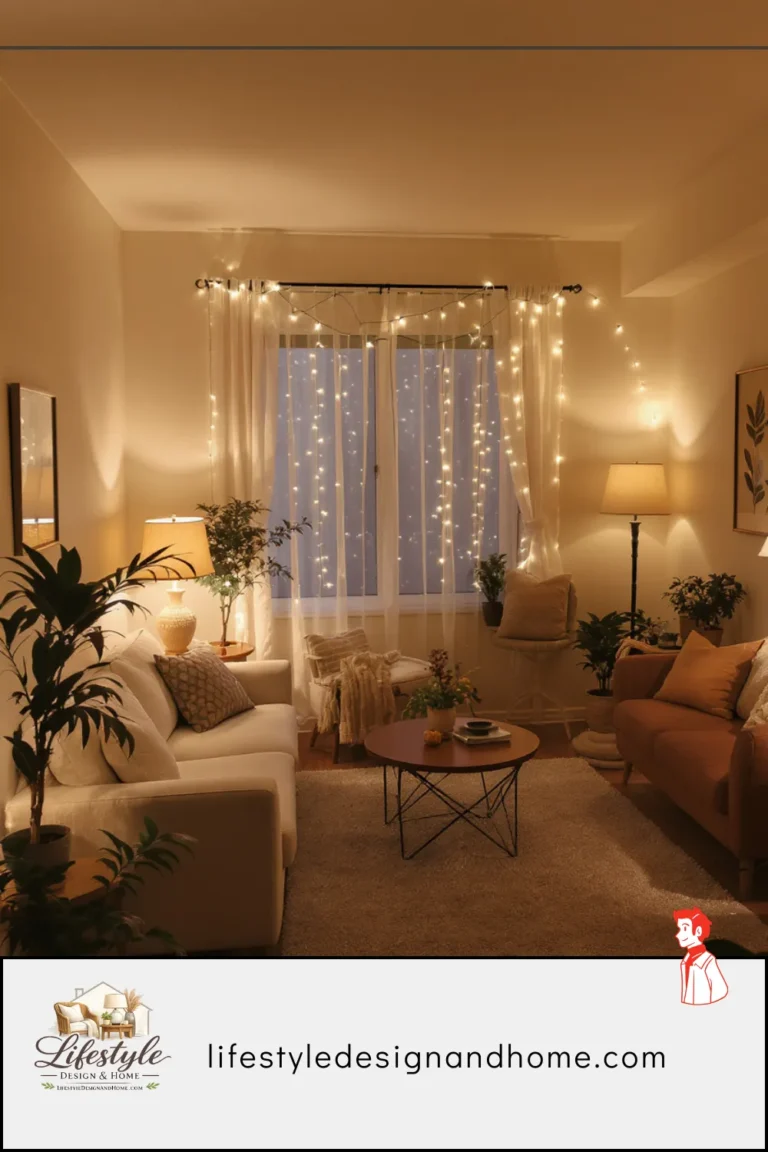
What works: floor lamps positioned at the perimeter of the conversation area, at corners or beside seating pieces, casting warm light inward and upward. Table lamps on any side tables within the zone. Candles on the coffee table during gatherings — the flickering warmth at table height is, as I discussed in the mood lighting article, literally the light human biology associates with safe gathering and conversation.
The specific effect of having light sources within and around the conversation area rather than only overhead: the zone becomes brighter relative to the surrounding room, which creates a sense of enclosure — the zone is the lit place, the room recedes around it. People sitting in the zone feel enclosed by light in a way that makes the area feel intentional and welcoming. People entering the room from outside the zone can see the warm, lit cluster and feel drawn toward it.
At my party — the one that didn’t work — I had no lighting in or around the conversation zone specifically. The room was evenly lit by overhead sources. The zone was no warmer, no more enclosed, no more inviting than any other part of the room. People drifted because there was nowhere that felt more like being somewhere than anywhere else.
My friend’s room had a floor lamp behind the sofa, a table lamp on the side table beside one of the chairs, and candles on the coffee table. The zone was visibly warmer and brighter than the surrounding room. People moved toward it the way people move toward a fire.
The Conversation Area for Small Rooms
Small living rooms — the focus of several other articles in this series — present specific challenges for conversation area creation, and the solutions require adaptation of the general principles rather than direct application.
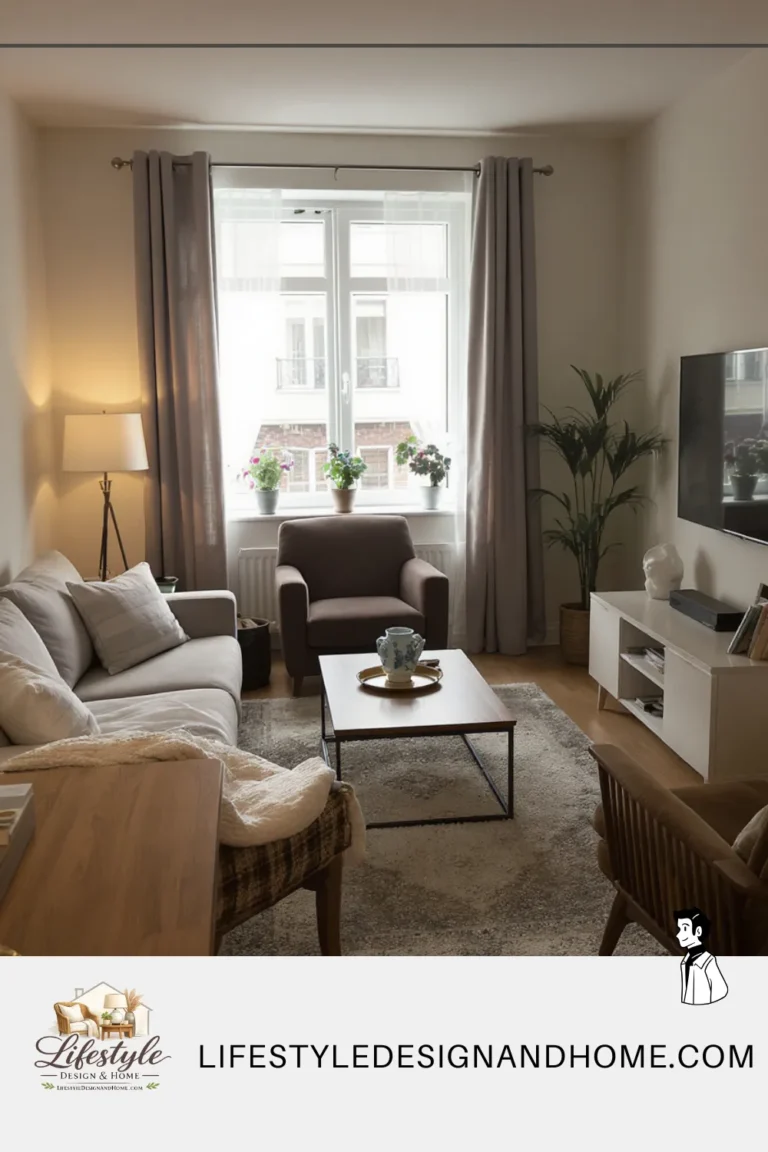
The primary challenge: the distances that make conversation areas work require a certain minimum floor area. A conversation area where the seating is within conversational range (4 to 8 feet seat-to-seat) and traffic paths are maintained (30 to 36 inches around the perimeter) needs a floor area of approximately 10 by 10 feet at minimum for a modest three-piece configuration. In a room that is 11 by 13 feet, this is feasible but requires precision. In a room that is 9 by 11 feet, it requires genuine constraint.
The adaptations that work:
Reduce the number of pieces. A small room’s conversation area might be a sofa and one chair rather than a sofa and two chairs — the configuration scales down while maintaining its logic. The conversational quality of a well-proportioned two-piece arrangement is better than the conversational failure of a three-piece arrangement where the pieces are too far apart or the traffic paths are too narrow.
Use lighter-scaled furniture. A sofa with a shallow depth — 32 to 34 inches rather than 38 to 40 — takes up less floor space while providing the same seating. Chairs with open frames rather than fully upholstered bodies have less visual and physical mass. In a small room, the conversation area’s furniture should be sized for conversation rather than for maximum comfort — slightly less physically generous, appropriately conversationally positioned.
Accept a conversation area without a full perimeter traffic path. In very small rooms, the conversation area might be entered from one side only — the other sides tight against walls or adjacent furniture. This is a compromise, but a conversation area that is accessible from one side and feels good to be in is better than no conversation area.
Use the single sofa plus floor space approach. In rooms too small for multiple seating pieces at the right distances, a single sofa with a coffee table and the understanding that guests can pull chairs from other areas of the room — or sit on floor cushions — creates a conversation zone that functions for small gatherings without permanently consuming the room’s limited floor space.
What Conversations Actually Need From a Room
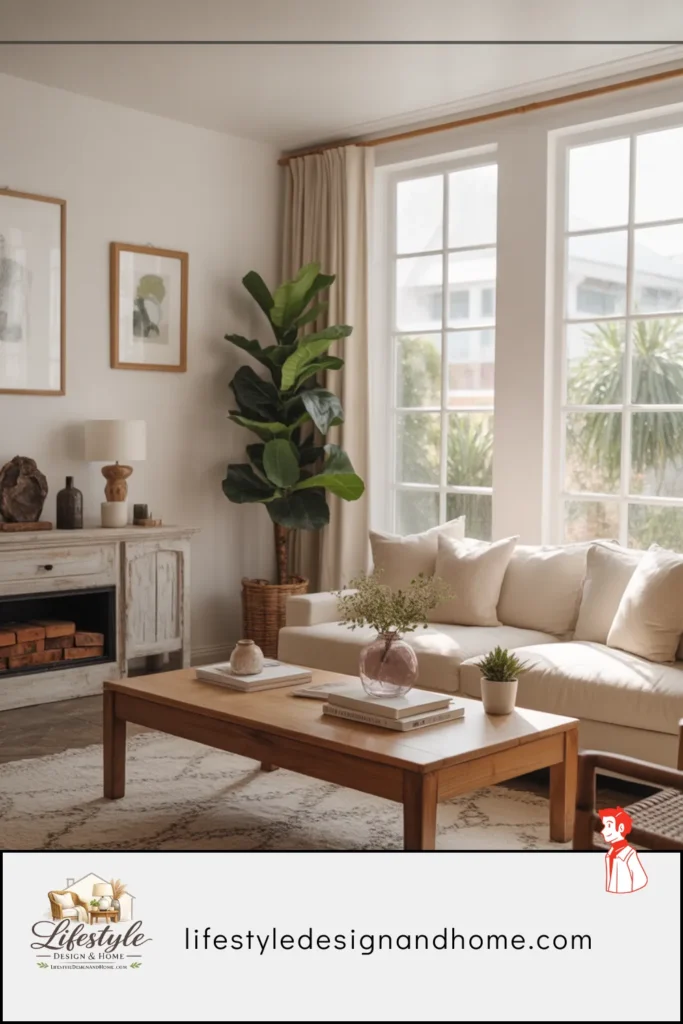
I want to end on something slightly different from the technical — on what I’ve come to understand about the relationship between space and conversation after years of thinking about rooms and the social life that happens in them.
Conversations are fragile things. Not in the sense of being easily damaged — people are resilient conversationalists and can manage in imperfect spaces — but in the sense of requiring conditions that support them rather than compete with them. A conversation needs its participants to be close enough that communication is effortless, enclosed enough that the participants feel gathered together rather than distributed across a room, and free enough from navigating their environment that the full attention available can go toward each other.
When a room provides those conditions — when it is arranged so that the conversation is what the room is for — something happens at gatherings that doesn’t happen otherwise. People stay. They lean back. They stop looking around the room or at their phones or toward the exit. They are in a place that is genuinely for them, and they respond to that by being present in it.
This is what my friend’s room had that mine didn’t. Not better furniture or more sophisticated styling — a room that told its occupants that this was where they were supposed to be and that being here together was the point.
The party I threw that didn’t work — that kept in my memory for years as a social failure — was not a social failure. It was a room failure. The room didn’t support the conversation I wanted to have in it.
The following year I threw a similar party in my rearranged room. Same guest list, roughly. Same occasion. The conversation never stopped. People stayed until 1 AM. Two of the guests — who hadn’t known each other before that evening — are now close friends.
Same people. Different room.
That is what a conversation area is for.
Your Conversation Area Checklist
The Configuration:
- [ ] Configuration chosen based on room shape and typical group size: U-shape, face-to-face, circular, or diagonal
- [ ] All seating pieces face inward toward the group center — not outward toward walls
- [ ] Sofa floated from walls — conversation area not pushed to room perimeter
The Distances:
- [ ] Seat-to-seat: 4 to 8 feet between facing seating edges
- [ ] Sofa to coffee table: 14 to 18 inches from cushion edge to table edge
- [ ] Coffee table to facing seating: 18 to 24 inches minimum
- [ ] Traffic paths: 30 to 36 inches clear around conversation area perimeter
- [ ] Maximum conversation circle diameter: 12 feet
The Rug:
- [ ] Front legs of all primary seating on the rug
- [ ] Rug sized significantly — 8-by-10 minimum for three-piece configuration
- [ ] Rug shape echoes configuration geometry
- [ ] Warm, substantial, tactile quality — not thin or cold
The Lighting:
- [ ] At least one light source within the conversation zone — floor lamp, table lamp, or candles
- [ ] Overhead dimmed in evenings — conversation area warmer than surrounding room
- [ ] Candles on coffee table for gatherings — warmth at table height
The Scale:
- [ ] Conversation area appropriately sized for room — not consuming all floor space
- [ ] Traffic paths to other room zones maintained
- [ ] In small rooms: fewer pieces at appropriate distances beats more pieces at wrong distances
The Room That Learned How to Work
My living room now has a U-shaped conversation area with the sofa floating about 14 inches from the wall, two chairs angled toward it, a wool rug anchoring the zone, a floor lamp in the corner behind the sofa, a table lamp on the side table, and candles on the coffee table when people come over.
I have not thrown a party since the rearrangement that made me wish the guests would leave sooner. The room has thrown them for me, in the sense that a well-arranged room creates the conditions and the guests do the rest.
It is still the same living room. The ceiling is still the same height. The furniture is the same in most cases. But the room knows now what it is for — and knowing what it is for, it does it.
That is the whole project, really. Not decorating. Not styling. Giving a room the conditions to fulfill its purpose.
A living room’s purpose is people living in it, together, talking.
Give it the geometry for that.