The Morning I Woke Up and Couldn’t Find the Floor
At its worst, my bedroom had 23 items on the floor.
I counted them one morning — a Tuesday, I think, the kind of flat grey Tuesday that invites inventory — standing in the doorway in the specific paralysis that a chaotic room produces. Two laundry baskets, one full and one half-full. A chair that had become a second wardrobe over the previous six months. Four pairs of shoes are arranged in no particular system. A stack of books had migrated from the nightstand to the floor when the nightstand ran out of room. A gym bag that had not been to the gym in three weeks. A box of things I’d moved from my previous apartment, with the sincere intention of sorting and had not sorted. A lamp I’d replaced but hadn’t taken anywhere. Several things I genuinely could not identify from the doorway.
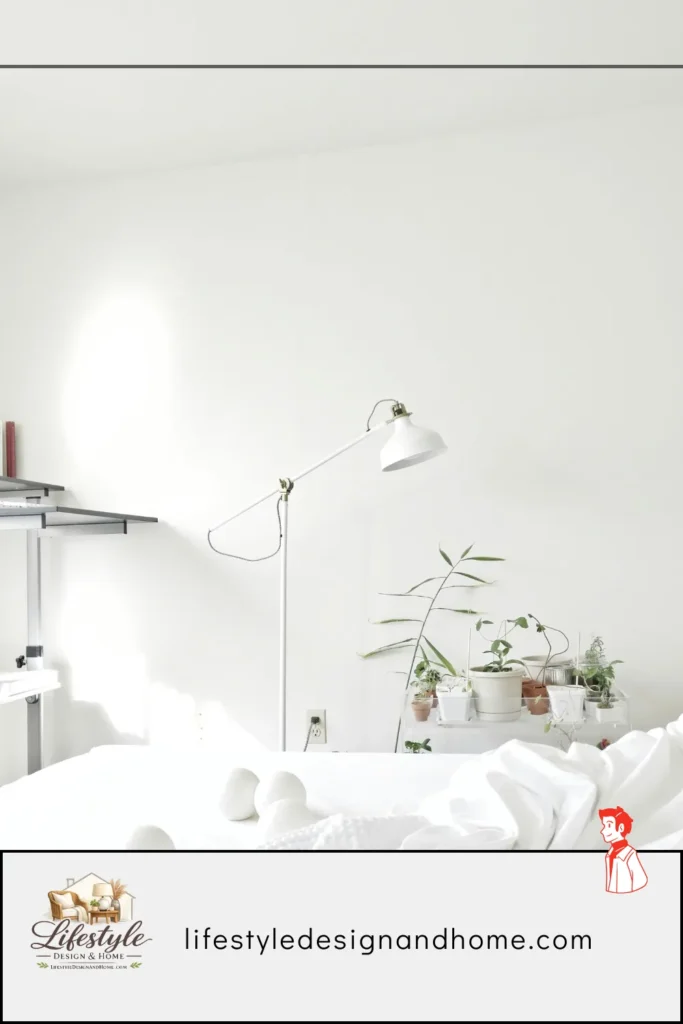
The bed itself was fine — I made it every morning, one of those small gestures of order in a surrounding disorder. But the bed in the middle of that room looked like a neat small island in a chaotic sea. Getting from the door to the bed required navigation. Getting dressed in the morning required decisions I hadn’t made the night before. The room was, in the most basic functional sense, not working.
I didn’t decide to become a minimalist that morning. I decided to clear the floor.
That was the beginning of a process that took about three months — not a dramatic weekend transformation, not a single decisive purge, but a gradual, deliberate simplification that changed not just how the room looked but how I felt in it, how I slept in it, how I felt at the beginning and end of every day.
Minimalist bedroom design is, in my experience, the most personally significant design project you can undertake — because the bedroom is where you begin and end every day, and the quality of that space affects things that matter far beyond aesthetics. This guide is about how to do it properly. Not the Instagram version with nothing in it. The version you can actually live in.
What Minimalist Bedroom Design Actually Means
I want to be careful here because this is where most minimalist bedroom guides go wrong from the very first paragraph.
Minimalist bedroom design is not about having as few objects as possible. It is not about white walls and one pillow and a mattress on the floor. It is not about aesthetic austerity or performative simplicity or rooms that look like they’ve been staged for a real estate photograph.
It is about removing everything that doesn’t contribute to the room’s primary function — rest — and keeping everything that does.
That framing changes what you keep and what you remove. A beautiful lamp that casts warm light in the evening promotes rest. It stays. A pile of unread magazines that creates a background sense of obligation every time you see them does not contribute to rest. They go. A soft throw that you actually reach for on cold nights contributes to rest. It stays. A decorative object you feel lukewarm about that sits on the dresser because you’ve never actively decided to remove it does not contribute. It goes.
This is a different standard than “does this spark joy?” — a question I find slightly too subjective and too easily gamed. The minimalist bedroom standard is more specific: does this serve the room’s purpose? Is this something I would choose to have here if I were starting from nothing?
I also want to be specific about what minimalist bedroom design is not: it is not cold. It is not uncomfortable. It is not the deliberate rejection of warmth or personality or the textures that make a room feel genuinely lived in. The minimalist bedrooms I most admire — the ones that make me stop in photographs, the ones that feel genuinely restful to be in — are warm, layered, and specific. They have personality. They just don’t have clutter.
The distinction between personality and clutter is real, and navigating it is the central skill of minimalist bedroom design.
The Four Principles That Make It Work
Before any specific decisions — about furniture, color, storage, textiles — four principles underlie every good minimalist bedroom. Understanding them changes how you make decisions rather than just giving you a set of rules to follow.
Principle 1: Intentionality Over Emptiness
The minimalist bedroom is not defined by absence. It is defined by intention — every object present because it was actively chosen, not because it was never actively removed.
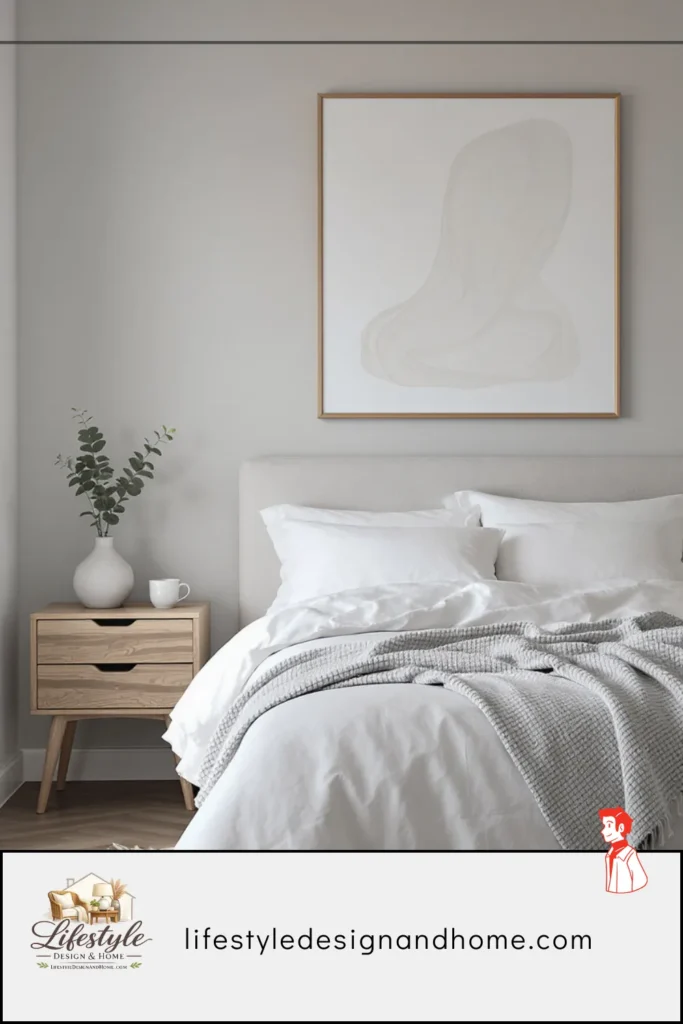
This is a subtle but important distinction. A room emptied without thought is just sparse. A room where every remaining object has been considered and kept for a specific reason is something different — it has the quality that designers sometimes call “resolved,” where the room feels complete rather than unfinished, quiet rather than empty.
In my own bedroom, after the three months of gradual editing, there are fewer objects than there used to be. But I can tell you exactly why each one is there. The lamp is there because it produces the specific quality of warm light I need for reading before sleep. The single plant is there because I find something living in the room genuinely calming. The one piece of art is there because I’ve loved it for years and I would notice its absence.
Nothing is there because I haven’t gotten around to removing it. That shift — from passive to active — is the whole project.
Principle 2: Every Surface Has a Maximum
In a minimalist bedroom, surfaces are not storage. They are not display cases for whatever accumulates on them over time. They have a maximum — a deliberate limit on how many objects they hold — and that maximum is determined by function rather than by how much space is available.
The nightstand maximum: one lamp, one book, one small object if any. Not two books, plus a lam,p plus a water glass, plus a phone, plus a notepad plus a candle. One lamp, one book, one small object. When something new arrives on the nightstand, something else leaves.
The dresser’s maximum: the objects actually used daily. Keys, wallet, and a small dish for jewelry. Not the accumulated archaeology of six months of putting things down.
The floor maximum: zero. This was the most transformative single rule I applied to my bedroom. Nothing lives on the floor of a minimalist bedroom. Not shoes, not laundry baskets, not bags, not books that didn’t fit on the nightstand. If it’s on the floor, it goes somewhere else or it goes away.
The zero-floor-objects rule sounds extreme until you try it. Then it becomes the rule you are least willing to give up because the effect of a clear floor on how a room feels is dramatic and immediate. A room with clear floors looks twice as large as the same room with objects on the floor. The floor is a material element — wood, stone, whatever it is — and it is beautiful when you can see it.
Principle 3: Storage Must Be Invisible or Absent
In a minimalist bedroom, storage is either hidden or eliminated.
Hidden means it lives behind closed doors — in wardrobes, in drawers, in boxes stored in closets. You don’t see it. It doesn’t contribute to the room’s visual environment. It simply keeps things organized and out of sight.
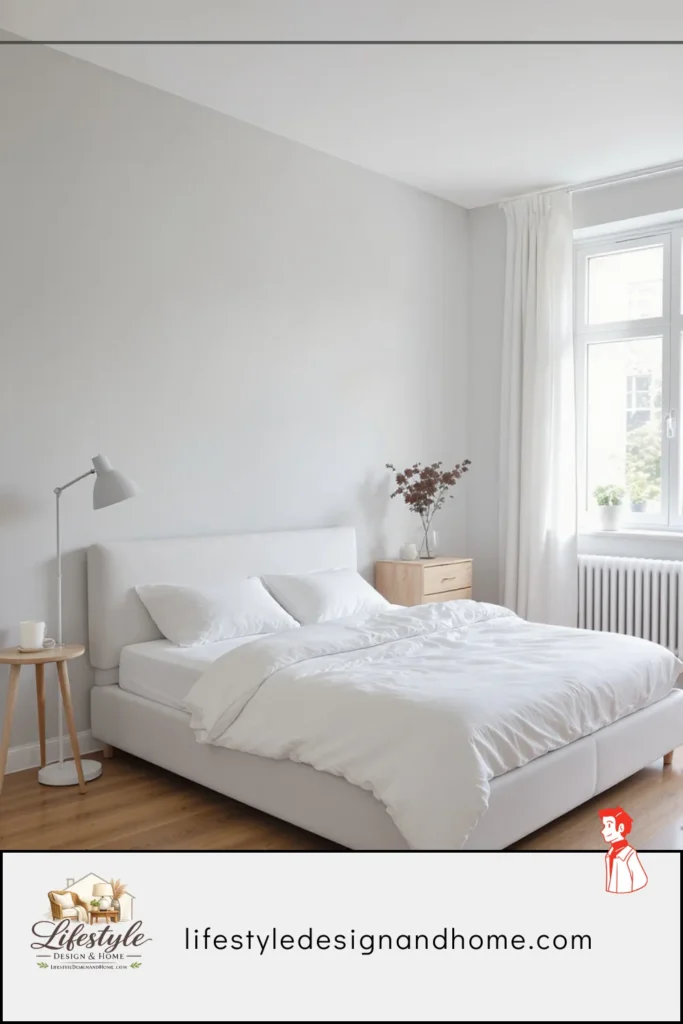
Eliminated means the thing being stored has been removed from the room entirely. Seasonal clothing stored in another space. Books kept elsewhere in the home rather than accumulating on every available surface. Objects that have no specific reason to be in the bedroom moved to the rooms where they actually belong.
The most common storage mistake in bedrooms — minimalist aspirations or not — is open storage in the sleeping space. Bookshelves that are full. Open wardrobe systems that require maintaining visual tidiness every single day or the room looks chaotic. Shelves with objects that accumulate and multiply. These solutions are not wrong aesthetically in other rooms. In a bedroom, they work against the room’s purpose because they require maintenance to look right, and maintenance is a form of low-grade obligation that does not contribute to rest.
My preferred storage approach: one or two pieces of furniture with good closed storage — a solid wardrobe, a chest of drawers with drawers that close properly — and nothing else. Everything either fits in those pieces or leaves the room.
Principle 4: Calm Is a Design Specification
The minimalist bedroom is designed for a specific emotional outcome: calm. Not beautiful, not impressive, not photogenic — calm. Every design decision should be evaluated against whether it contributes to or detracts from that specific quality.
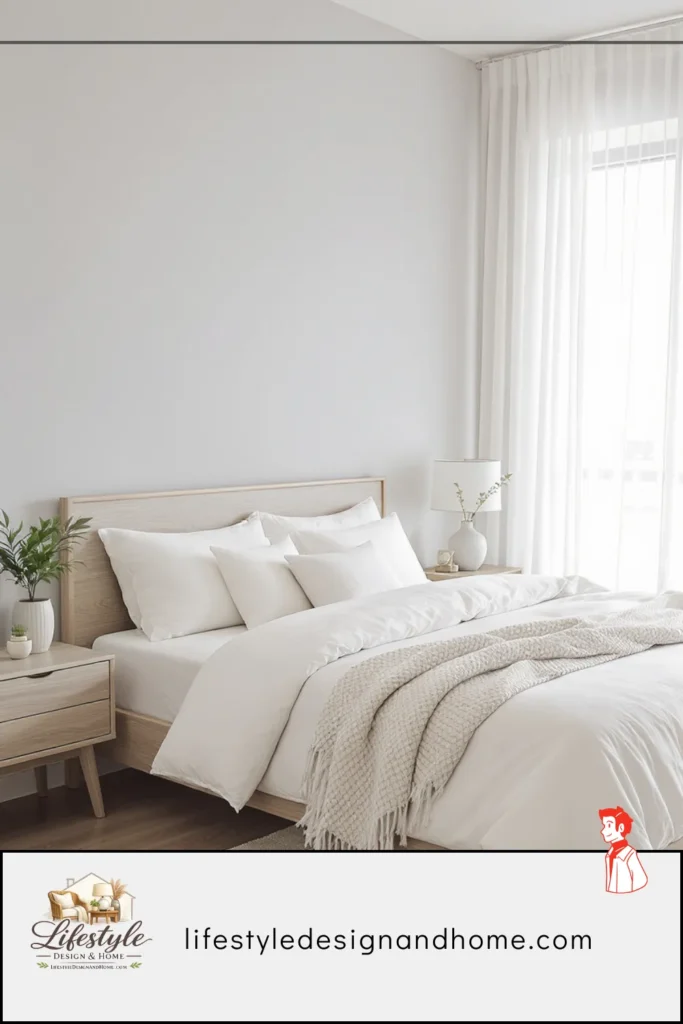
This is a different standard than most room design, where the goals are broader and include aesthetics, personality expression, visual interest, and hospitality. Bedrooms are not hospitality spaces. They are not spaces for demonstrating taste to visitors. They are spaces for the specific human activity of sleep, and sleep requires a quality of environmental calm that is incompatible with visual noise, unresolved decisions, and accumulated obligations.
When I apply this standard to a decision — whether to keep an object, which color to paint the walls, what to put on the nightstand — it simplifies enormously. Not “do I like this?” but “does this contribute to calm?” The answers are usually obvious.
The Bed: Where Minimalism Lives or Dies
The bed is the most important object in the bedroom — not just functionally but visually. In a minimalist bedroom, the bed is usually the only significant piece of furniture, the element everything else responds to, and the thing that most determines whether the room reads as restful or not.
The platform or low-profile frame:
Minimalist bedroom design is almost universally built around low-profile beds — platform frames, tatami-style, or simple slat designs close to the floor. The visual logic: a lower bed makes the ceiling feel higher, the room feel larger, and the proportions feel calmer and more horizontal. High, elaborate bed frames with tall headboards, curved posts, or decorative woodwork introduce visual complexity that works against the aesthetic.
I switched from a standard-height frame with a wooden headboard to a simple low platform about two years ago. The room felt different immediately — not just aesthetically but spatially. The ceiling felt higher. The floor around the bed felt more generous. The room had a quality of openness it hadn’t had before, even though nothing else had changed.
The headboard question:
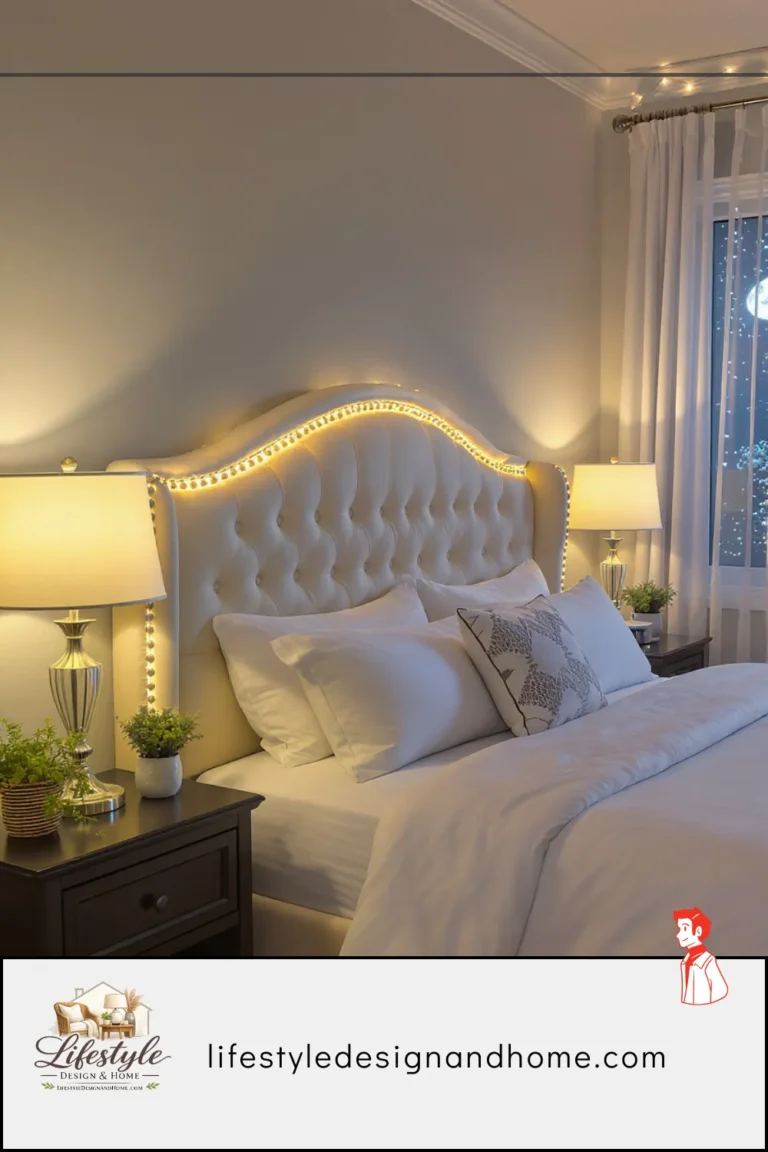
Minimalist bedrooms often have no headboard, or a very simple one — a padded rectangle in neutral linen, a simple wooden panel, a floating shelf used as a headboard alternative. The elaborate upholstered headboards that dominate contemporary bedroom furniture — tufted, oversized, with nail head trim or scalloped edges — are aesthetically incompatible with the aesthetic in most interpretations.
My current setup is no headboard — just the low platform frame, the bed floating slightly from the wall. I was uncertain about this at first. Now I wouldn’t go back. The wall behind the bed becomes a feature rather than a backdrop, and the single piece of art I have above the bed has more presence without a headboard competing for visual attention.
The bedding:
In a minimalist bedroom, the bedding carries most of the room’s warmth and personality — because it is one of the few surfaces with texture, color, and material specificity. Getting it right matters.
Natural materials: linen, cotton, or a linen-cotton blend. Not for aesthetic reasons alone — though they photograph beautifully — but because natural fibers breathe better than synthetics, soften with washing in a way that feels genuinely better over time, and have a material honesty that aligns with the room’s broader philosophy.
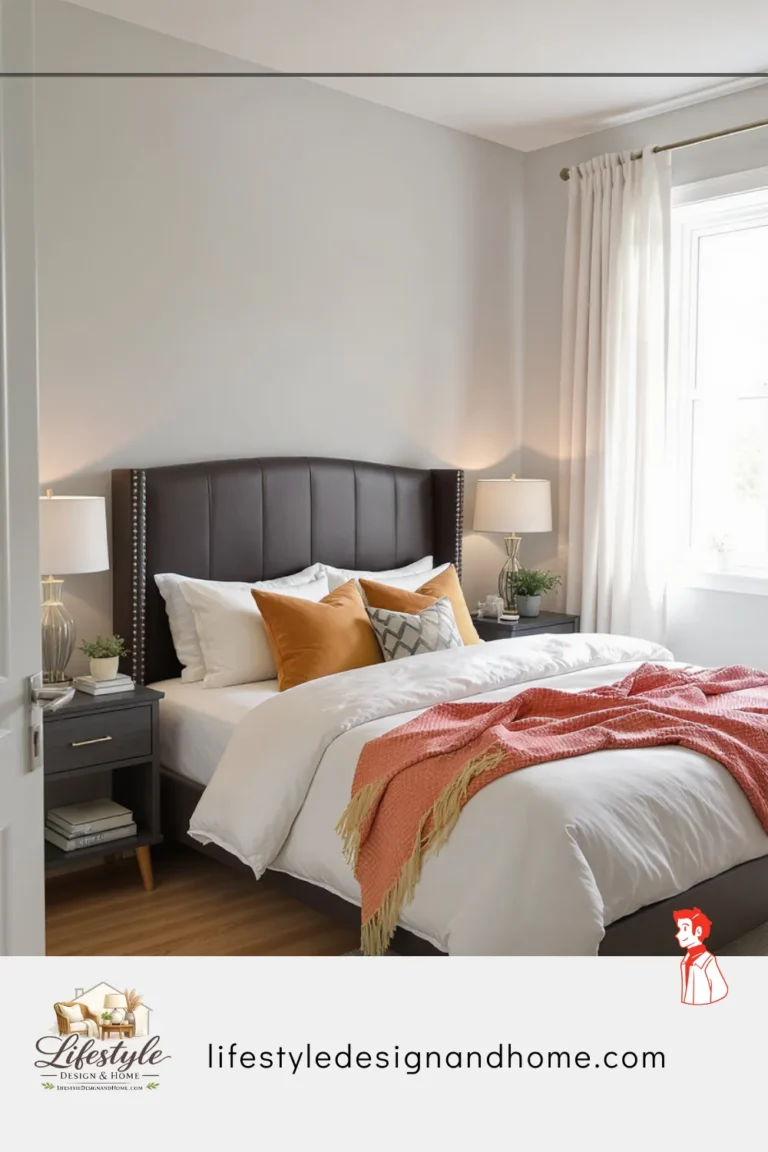
The color: warm neutral is almost always right. Off-white, warm grey, dusty sage, oatmeal linen. The bedding should feel like it belongs to a bedroom — restful, organic, unhurried. Bright colors and bold patterns introduce visual energy that works in other aesthetics and against this one.
The quantity: fewer pieces than a fully styled bed, layered more casually. A duvet or quilt, two sleeping pillows, one or two decorative pillows maximum. The bed should look like someone sleeps in it, not like it was assembled for a photoshoot. A throw loosely folded at the foot — something you actually use — adds warmth without adding visual weight.
I went through several bedding phases — one that was too white and felt clinical, one with too many pillows that felt over-managed — before landing on warm linen in a color my supplier described as “undyed flax.” It is perfect. It looks like it grew rather than was manufactured, which is the quality minimalist bedding should have.
Color: The Specific Science of Bedroom Calm
Minimalist bedrooms are not necessarily white bedrooms, though white is the most commonly associated color. The right color for a minimalist bedroom is the one that produces the specific quality of visual and psychological calm the room is designed for — and that color is different for different rooms, different light conditions, and different people.
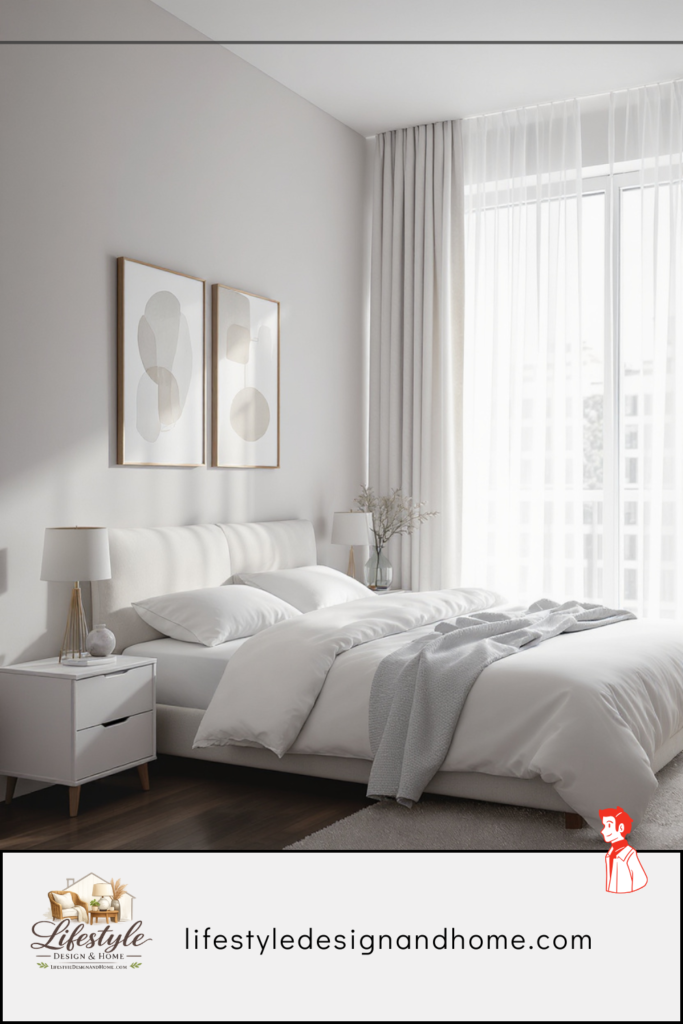
What the research and my own experimentation suggest:
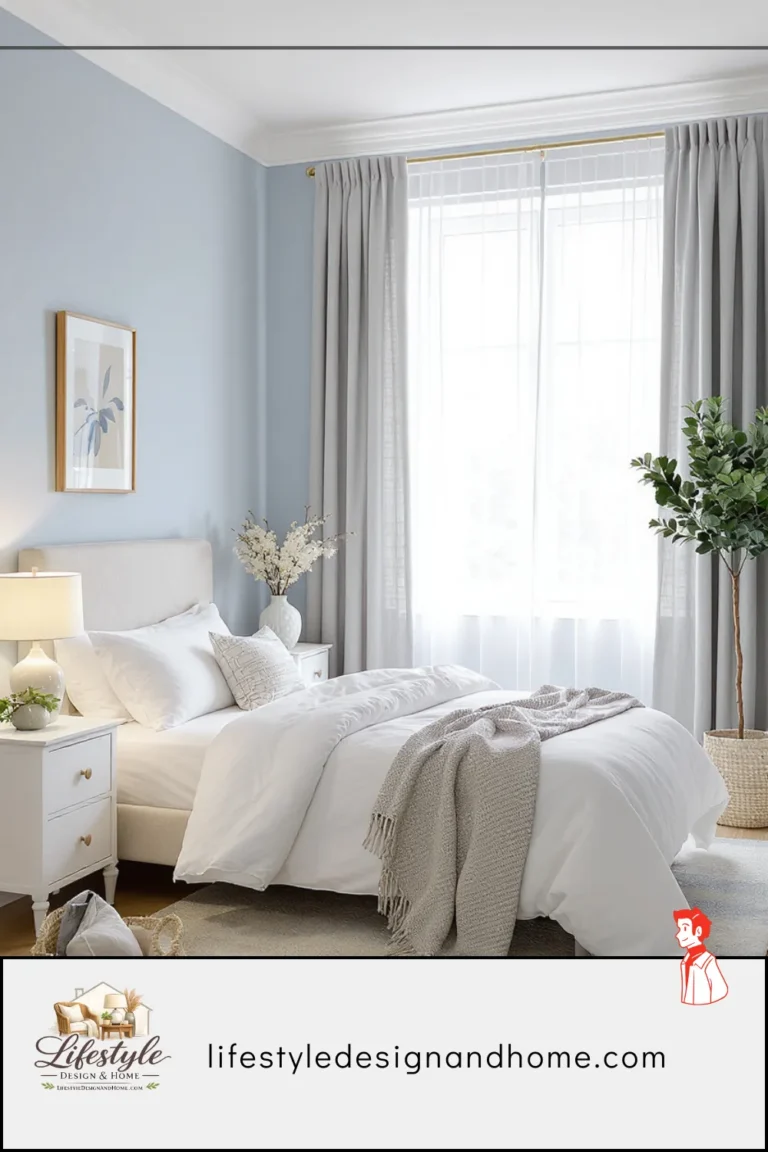
Warm neutrals outperform cool neutrals in bedrooms. Cool greys and blue-whites are visually clean but tend to produce rooms that feel slightly cold — not temperature cold, but emotionally uninviting. Warm whites, warm greys, creamy off-whites, and pale tones with warm undertones produce rooms that feel simultaneously calm and inviting. The specific undertone matters: a white with pink or yellow warmth feels different from a white with blue or green undertones, and in a bedroom, warm undertones almost always serve the room better.
One color throughout is more calming than two. The most restful minimalist bedrooms I have experienced are those where the wall color relates closely to the bedding color, which relates closely to the floor color. The room reads as a single tonal field rather than several competing surfaces. This doesn’t mean everything is identical — variation in tone and texture is what makes it interesting — but the overall color temperature is consistent throughout.
Darker colors can work in specific circumstances. A bedroom with good natural light, high ceilings, and a considered approach to the remaining elements can be beautiful in a deep dusty sage, a charcoal, or a warm terracotta. These are committed choices that require everything else to work very hard, and they are not forgiving of the slightest misstep in furniture or lighting. For most people designing a minimalist bedroom for the first time, I would recommend a warm neutral and save the dramatic colors for later experiments.
My bedroom is currently painted in a color my paint company calls “aged linen” — a warm, slightly creamy off-white that looks different at different times of day and under different light conditions. In the morning, it is almost white. In the evening, under warm lamp light it goes amber and feels close and warm. It has never been wrong in any light condition. I cannot ask more of a paint color than that.
Furniture: The Minimum Viable Bedroom
The minimalist bedroom philosophy applied to furniture is straightforward: include only the pieces the room genuinely needs, chosen at the right scale for the room, and nothing additional.
The essential pieces for almost every bedroom: a bed frame, two nightstands (or one, or floating shelves, depending on preference and available space), and closed clothing storage. That is the minimum viable bedroom — the set of pieces that allows the room to function without anything extra.
Every additional piece requires justification. A reading chair: does the room have space for it without crowding? Do you actually read in the bedroom, or do you tell yourself you will? A bench at the foot of the bed: does it serve a genuine function, or is it a decorating convention you’ve imported without examining? A second dresser: is the clothing it stores genuinely needed in this room, or could it be elsewhere?
The questions sound harsh. They are helpful. I removed a bench from the foot of my bed eighteen months ago — a piece I had bought because it seemed like the right thing to have there — and the room gained several feet of clear visual space and the specific quality of a room that hadn’t tried too hard. I haven’t missed the bench once.
Nightstands specifically:
The nightstand in a minimalist bedroom has a specific job: to hold the objects needed for the transition into and out of sleep. A lamp. A glass of water. A book. A phone, if it must be in the room at all (the minimalist argument for keeping it elsewhere is strong and correct and I make it to myself regularly while ignoring it).
This is three or four objects. The nightstand should be sized for three or four objects and not significantly larger. An oversized nightstand invites accumulation — the surface fills because surface area fills, and a nightstand that comfortably holds twelve objects will eventually hold twelve objects.
I use a nightstand that is 18 inches wide and 20 inches tall with one small drawer and an open shelf below. The drawer holds one small notebook and a pen. The shelf holds nothing. The surface holds a lamp, a glass of water, and the current book. When a second book appears, the previous one leaves the room. The size of the nightstand enforces the discipline that the nightstand’s maximum requires.
Storage: The Hidden Architecture
The single biggest practical challenge in minimalist bedroom design is not aesthetic — it is functional. People have clothing, and clothing needs to go somewhere, and the somewhere needs to be in or near the bedroom for the room to function as a bedroom.
The approach I’ve found works:
Go vertical rather than wide. A tall wardrobe that uses wall height is less visually intrusive than a wide, low dresser that spreads across the floor. Tall closed storage recedes visually. Wide low storage sits in the visual field and demands attention.
Closed storage exclusively. This is the principle I am most firm about. Open shelving in a bedroom requires maintaining visual tidiness every single day or the room looks chaotic. Closed storage requires organizing once and maintaining organization once in a while. The discipline required to maintain an open wardrobe at the visual standard a minimalist bedroom demands is, for most people, unsustainable over time. Closed doors make it sustainable.
Edit what goes in before worrying about how it’s stored. The storage problem in most bedrooms is not organizational — it is volumetric. There is more clothing than there is space for clothing, and no organizational system resolves a volume problem. The minimalist approach to clothing storage begins with removing clothing rather than reorganizing it. A wardrobe that holds only what is actually worn, in quantities that fit comfortably without compression, is a wardrobe that can be organized simply and maintained easily.
I went through my wardrobe in the same three-month period I cleared the floor. I removed approximately a third of what was in it — things I hadn’t worn in over a year, things I’d kept out of vague obligation, things I owned duplicates of for no reason. The remaining two-thirds fit comfortably in my existing furniture. I haven’t bought a new organizational system since because none is required.
Under-bed storage as a considered choice:
Under-bed storage is useful and slightly at odds with the aesthetic. Beds that reveal floor beneath them — platform beds with legs, frames that float above the floor — create a quality of visual lightness that low-clearance storage beds don’t. Under-bed drawers are practical but eliminate that quality.
My compromise: a platform bed with enough clearance to be visually light, and flat storage boxes beneath it for seasonal items that don’t need regular access. The boxes are not visible from normal standing height. The visual quality of the floating bed is preserved. The storage capacity is meaningful. This is a workable middle position and one I’d recommend to anyone who needs the storage but values the aesthetic.
Lighting: The Minimalist Bedroom’s Warmth Mechanism

I’ve covered bedroom lighting extensively in a separate article in this series, but in the context of minimalist design specifically, there are a few principles worth stating directly.
In a minimalist bedroom, where there are fewer objects to create warmth through texture and accumulation, lighting carries more of the room’s emotional weight. The quality of the light becomes more important, not less, as the room becomes simpler.
The mistake minimalist bedrooms most often make is being designed with beautiful simplicity and then lit with a single ceiling fixture at 4000K — bright, flat, and clinical. The room looks cold. Not because the design is wrong, but because the lighting is actively hostile to what the design is trying to do.
Warm, layered, dimmable lighting is non-negotiable in a minimalist bedroom. Two bedside lamps or sconces at 2700K. A floor lamp in the corner that needs warmth. No bright overhead as the primary evening source. The room should go amber in the evening, and the transition from daytime to evening should be a physical change in the room that the body recognizes as permission to rest.
I added a second bedside lamp — I had only one for years — and the symmetry of warm light on both sides of the bed changed the room in a way I hadn’t anticipated. The bed felt more centered. The room felt more complete. A detail I had thought was optional turned out to be structural.
The Edit: How to Actually Get There
The most common question I get when discussing minimalist bedroom design is not about furniture selection or color choice or storage systems. It is: how do I actually do this? How do I go from the room I have to the room I want without it being overwhelming?
The process I used and recommend:
Start with the floor. Clear everything off the bedroom floor — everything, without making decisions about where it goes yet. Put it in another room. Stand in the doorway and look at the room with a clear floor for five minutes. This single act shows you what the room could be and gives you a reason to fight for keeping the floor clear. Then return each item only if it has a specific place to go that isn’t the floor. If it doesn’t, it leaves the room permanently.
Then do the surfaces. Clear every surface — nightstands, dresser, any shelves. Everything goes into a box or another room. Now add back only what the surface’s function requires. The nightstand gets a lamp, a glass, a book. The dresser gets a small dish for daily-use items. Nothing else returns to a surface unless it has passed the test: does this contribute to the room’s calm?
Then open the wardrobe. This is the longest step. Remove anything not worn in the past year. Remove duplicates beyond one or two. Remove aspirational clothing — the things kept for the person you might become rather than the person you are. What remains should fit comfortably, be organized simply, and represent what you actually wear. If it doesn’t fit comfortably, remove more.
Then address the furniture. With the floor clear and the surfaces edited, evaluate each piece of furniture on its merits. Is it earning its floor space? Does it serve a function that is actually used? If a piece has become furniture-shaped storage for things that don’t deserve storage, consider whether the piece belongs. This step is slower and more expensive — furniture decisions are not easily reversed — and it should come after the other steps so you have an accurate picture of what the room actually needs.
Then stop. This is the step most people skip. They edit the room and then immediately begin thinking about what to add. Don’t. Live in the edited room for a month before making any new acquisitions. You will discover what is actually missing — which is almost always less than you expected — and you will make better decisions about what to add because you have experienced the room without it.
What You Keep: The Minimum That Makes It Feel Like Yours
I want to end on this because minimalist bedroom design has an aesthetic reputation for coldness and impersonality that I think is both unfair and avoidable.
The minimalist bedroom is not a hotel room. Hotel rooms are anonymous by design — they must be acceptable to anyone and personal to no one. The minimalist bedroom is personal — it is simplified and edited, but it reflects the person who sleeps in it.
What makes it personal in a minimalist room is not volume but specificity. Not many objects but the right ones. The piece of art that you would choose again if you lost it. The plant that you have kept alive for two years and feel genuine affection for. The lamp you bought from a ceramicist at a market and think about when you look at it. The throw that belonged to someone you loved.
These are not decorations. They are the room’s personality, distilled to its essence.
My bedroom has eleven objects in it that are not furniture, storage, or bedding: a lamp on each nightstand, a plant in the corner, one piece of art above the bed, a small ceramic bowl on the dresser for keys and coins, one photograph in a simple frame, a throw at the foot of the bed, and two books on the nightstand — one I’m reading, one I’m about to start.
Eleven objects. I know every one of them. I know why each one is there. I would notice if any of them were gone.
That relationship — with the specific, chosen, known objects in a room rather than with the accumulated, unremarked mass of a room that filled over time — is what minimalist bedroom design is actually after.
Not emptiness. Presence. The presence of the things that are worth having, in the room that matters most.
Your Minimalist Bedroom Checklist
The Principles:
- [ ] Every object present because it was actively chosen — not because it was never removed
- [ ] Every surface has a maximum — enforced consciously
- [ ] Storage is invisible: closed furniture only, no open shelving
- [ ] Every decision evaluated against: does this contribute to calm?
The Morning After
The floor has been clear for two years.
Not always perfectly — life happens, and some mornings there is a bag on the floor or a pair of shoes that didn’t make it back to the closet. But the default state of the room is clear, and returning to that default takes five minutes rather than an afternoon.
The 23 items that were on the floor that Tuesday morning are mostly gone. Some were thrown away. Some were moved to their proper rooms. Some were donated. I don’t remember most of them, which tells me something about how much they were serving me while they sat there taking up space and producing that specific paralysis that a chaotic room creates.
The room I wake up in now is the same room. Same square footage, same windows, same radiator in the same corner. But it is a room I step into rather than navigate. A room that feels like it was made for sleeping rather than accumulated around sleeping. A room where the first moments of morning — standing in the doorway, looking at the clear floor and the warm low light coming through the curtain — feel like a beginning rather than an already-behind.
That is what minimalist bedroom design does when it works. Not make the room look better. Make the beginning and end of every day feel different.
That is, I think, worth the three months it took.